I Got Thousands of Dollars in Flights From Chase Points. Here’s How.
I think Chase Ultimate Rewards points are some of the most valuable points somebody can have. Not because they are always worth some insane amount, and not because every redemption is automatically good.
They are valuable because they are flexible.
You can take Chase points and transfer them to some of the best airline loyalty programs in the world. That opens the door to flights that would normally cost thousands of dollars in cash, especially if you are looking at business class or first class.
Cash back is simple. Booking through a travel portal is simple. But the real fun begins when you transfer Chase points to airline programs and use them strategically.
These are three of the best ways I have found to use Chase points.
1. Transfer to Aeroplan for aspirational first class flights
One of my favorite Chase transfer partners is Air Canada Aeroplan.
Aeroplan is useful because it gives you access to a huge number of partner airlines, including some airlines that still offer true international first class. That matters because real first class is becoming rarer every year. A lot of airlines have cut back on first class entirely, replaced it with business class, or only offer it on a tiny number of routes.
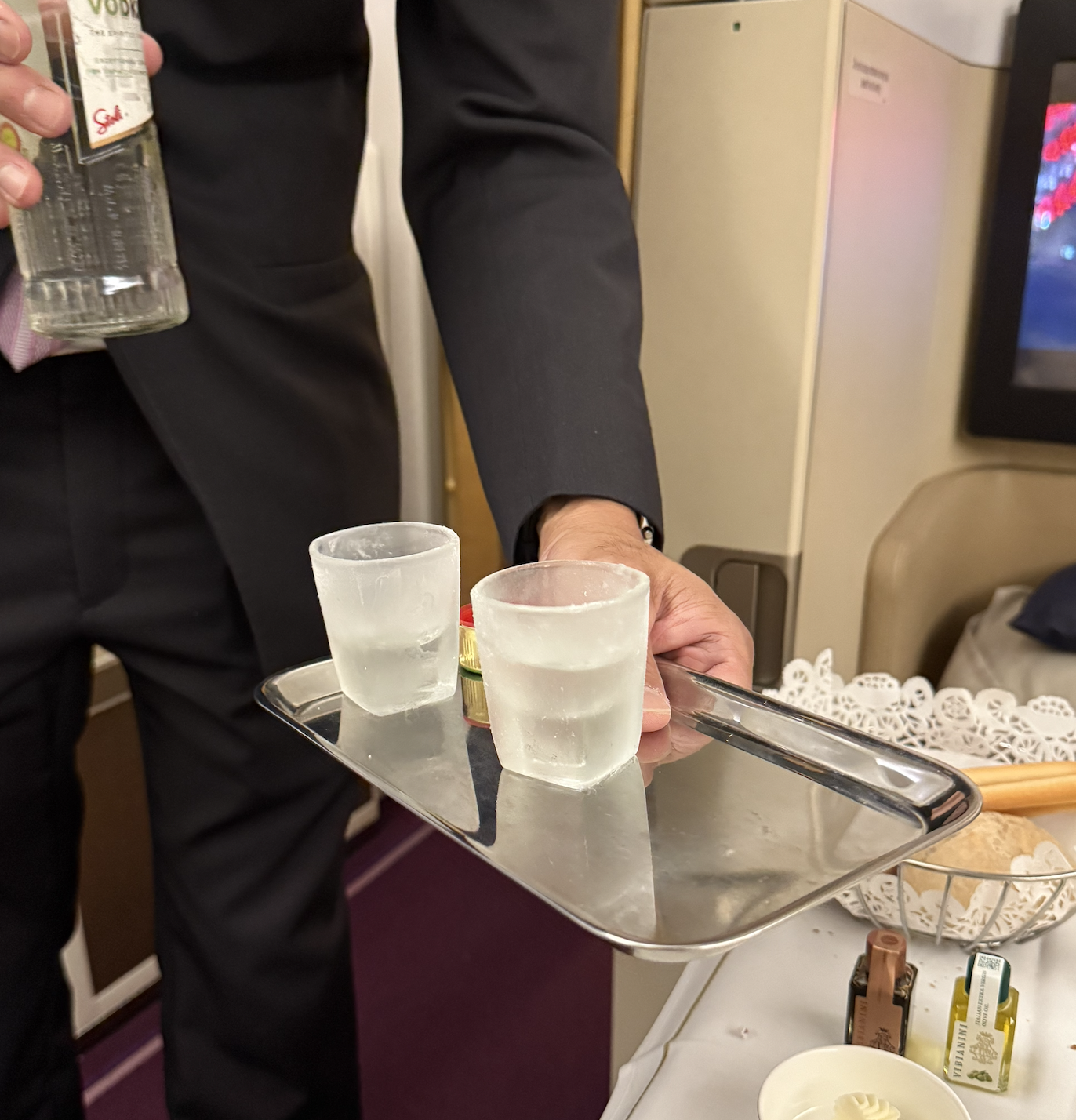
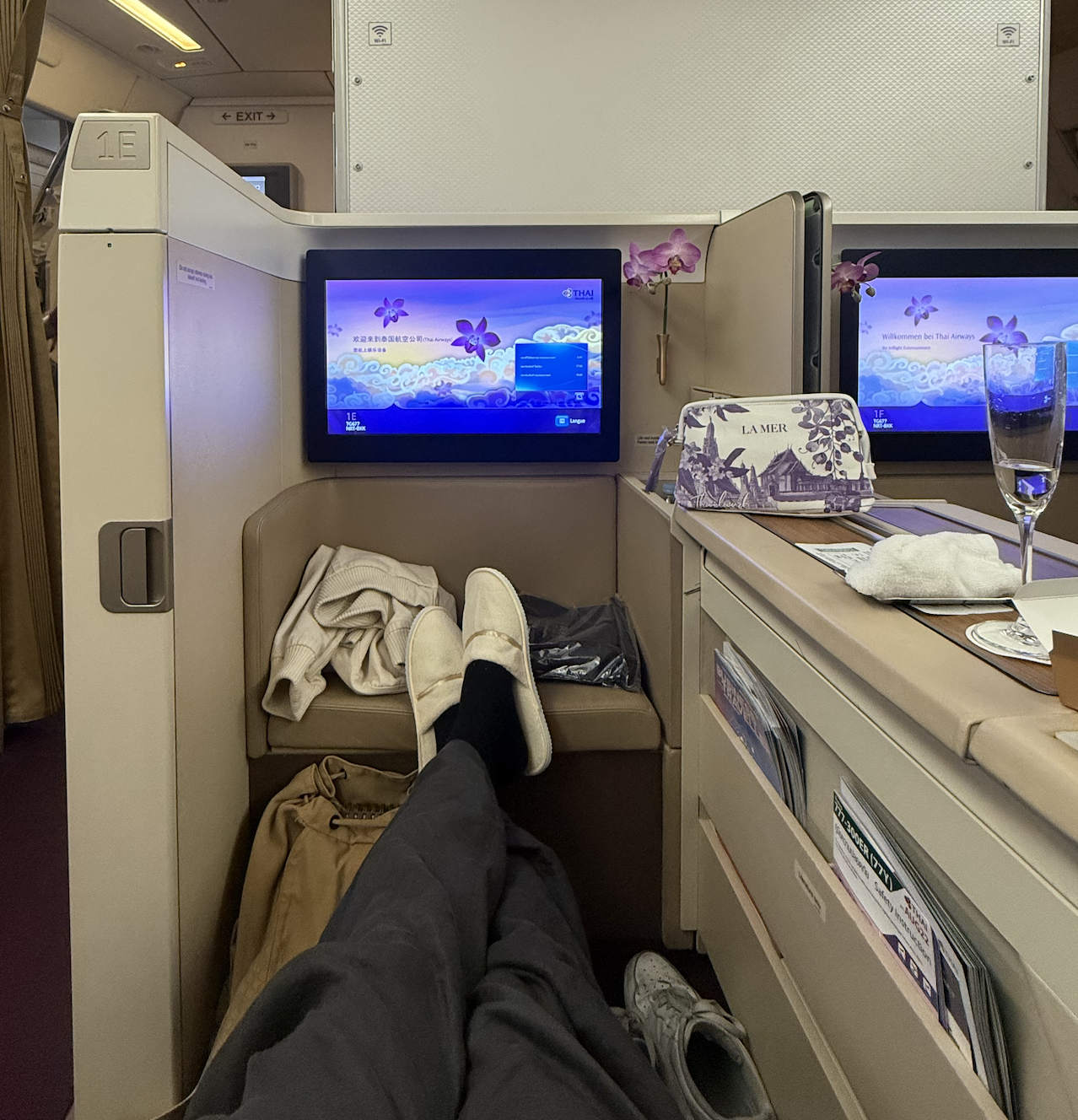
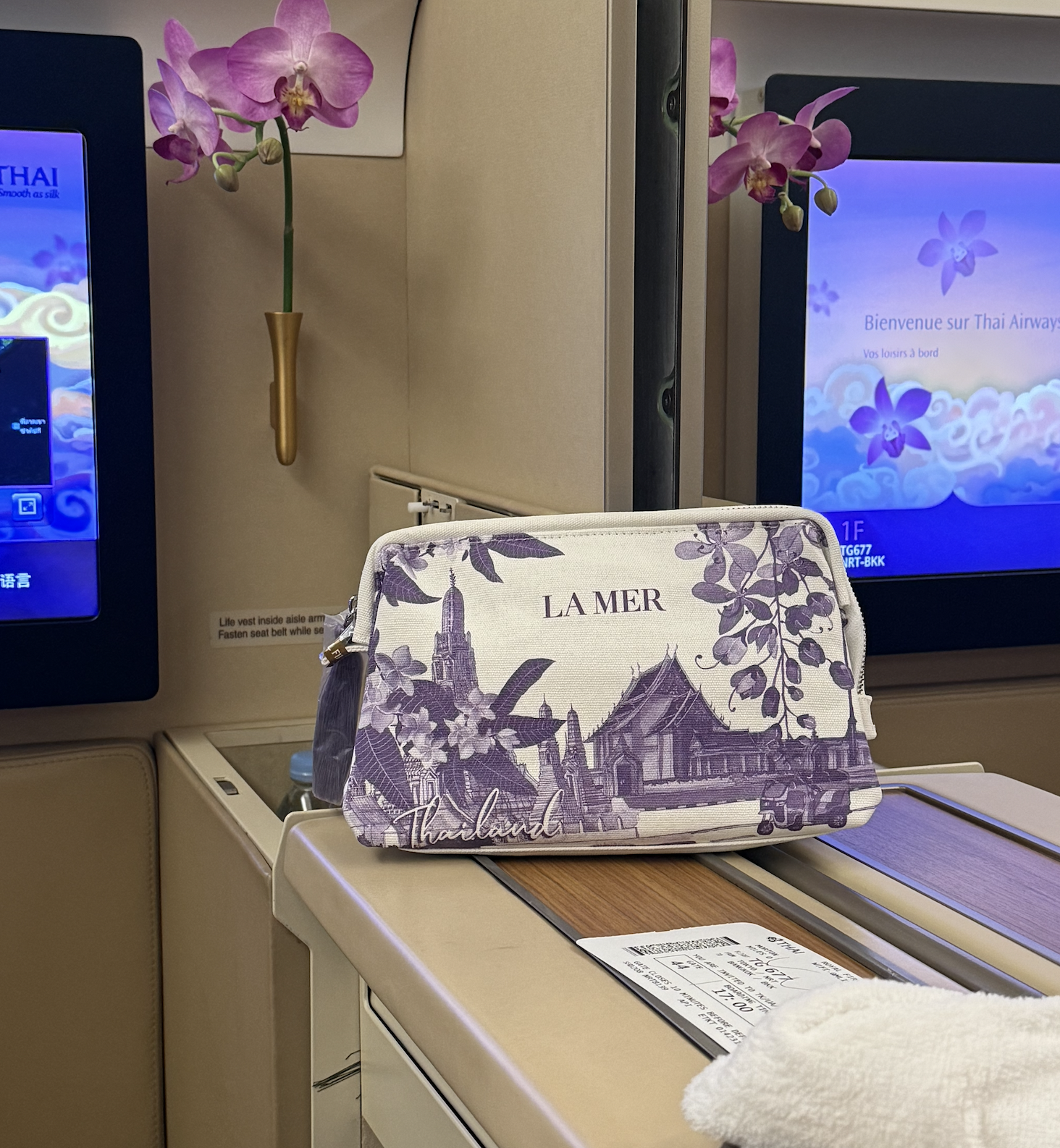
That is what made my Thai Airways first class booking so exciting.
I booked Thai Airways first class between Bangkok and Tokyo for 60,000 points. This is the kind of flight that can regularly retail for thousands of dollars, especially if you are booking close to departure or looking at a one-way international premium cabin ticket.
And this was not just “a slightly better seat.” This was a true first class product from a full-service international airline. Better seat, better food, better service, better ground experience, and the overall feeling that you are doing something extremely unnecessary in the best possible way.
That is the whole point of miles and points.
Most people are not going to spend thousands of dollars in cash for a few hours in first class between Bangkok and Tokyo. I probably would not either. But 60,000 transferable points? That is a completely different conversation.
This is where Chase points become powerful. You are not locked into one airline. You are not stuck using points at a fixed value. You can move them into a program like Aeroplan when there is a specific high-value redemption available.
That is the key: do not transfer points speculatively. Find the flight first, confirm availability, then transfer.
2. Transfer to Flying Blue for Europe in style
Another excellent use of Chase points is transferring to Air France-KLM Flying Blue.
Flying Blue can be especially useful for travel between the United States and Europe. Award pricing can vary, taxes and fees can be annoying, and availability is not always perfect. But when the pricing lines up, it can be a very strong program.
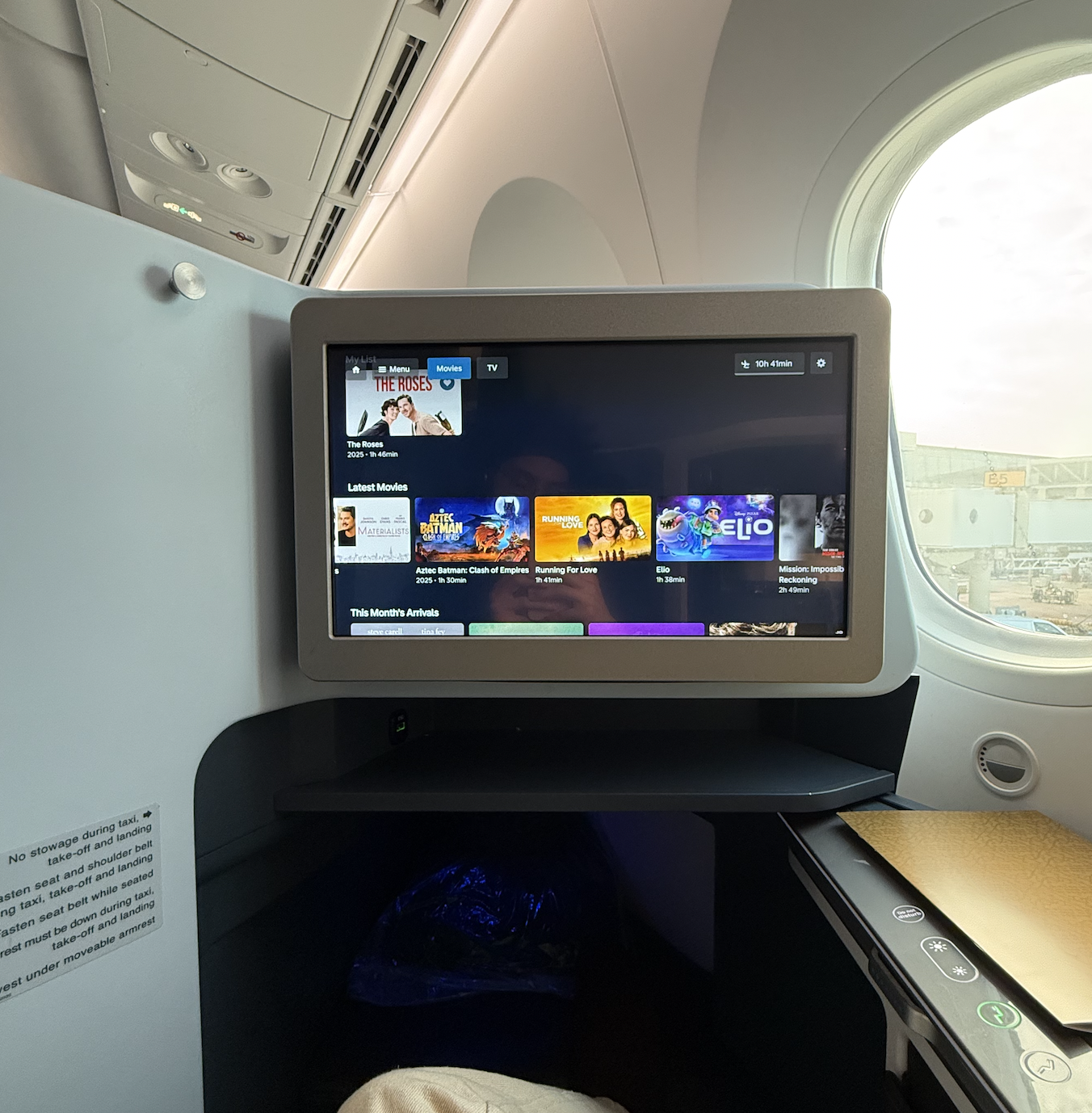
My recent example was a flight from Istanbul to Los Angeles with a day-long layover in Amsterdam. There is a full review of that flight coming, but the short version is that it was a very enjoyable 12-hour transatlantic crossing booked for just 60,000 Flying Blue miles plus taxes and fees.

Now, Flying Blue fees can absolutely be high. Sometimes they are not a big deal. Sometimes they are several hundred dollars. That is the annoying part of the program.
But there are two reasons I still think Flying Blue is one of the best Chase transfer partners.
First, Flying Blue often has solid award availability to and from Europe. If you are flexible with dates, cities, or routing, you can sometimes find very strong options.
Second, Chase frequently offers transfer bonuses to Flying Blue or other airline partners. These bonuses can change month to month, but they can make an already good redemption significantly better. A 20% or 25% transfer bonus means you need fewer Chase points to book the same flight.
That matters.
A 60,000-mile award with a 25% transfer bonus does not really cost 60,000 Chase points. It costs 48,000 Chase points transferred during the bonus window. That is a massive difference, especially for a long-haul business class flight.
This is why I always check transfer bonuses before booking European flights. The fees may be irritating, but the overall value can still be excellent when the points price is low and the cash ticket is expensive.
3. Transfer to Virgin Atlantic for weirdly cheap points pricing
Virgin Atlantic Flying Club is one of the strangest and most interesting Chase transfer partners.
The fees can be brutal. There is no getting around that. Virgin redemptions can come with some of the highest cash surcharges of any major airline program.
But sometimes the points pricing is so low that it still makes sense.
Take Virgin Atlantic Flight 10 between New York and London. In the example I was looking at, the flight was pricing at around 29,000 points plus roughly $700 in fees.
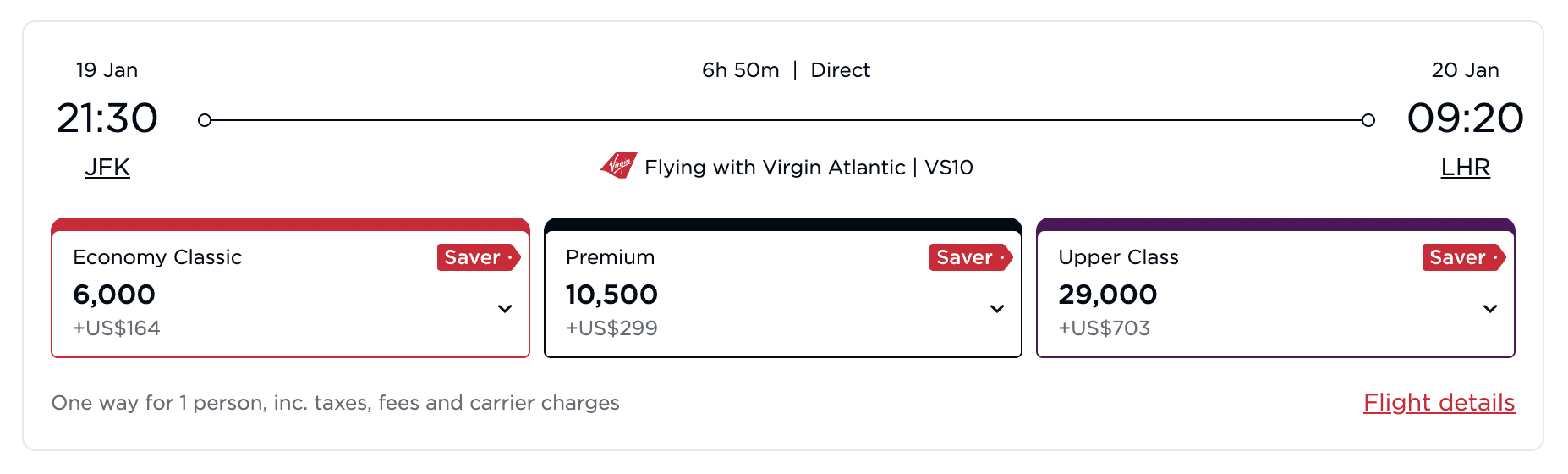
Is $700 in fees high? Absolutely. It is not some “free flight” fantasy.
But 29,000 points is extremely low for a long-haul premium cabin redemption. If we value those points at 1 cent each, that is $290 worth of points plus about $700 in fees, putting the total implied cost under $1,000 before even considering any transfer bonus.
The advertised cash fare for that same flight was over $2,500.
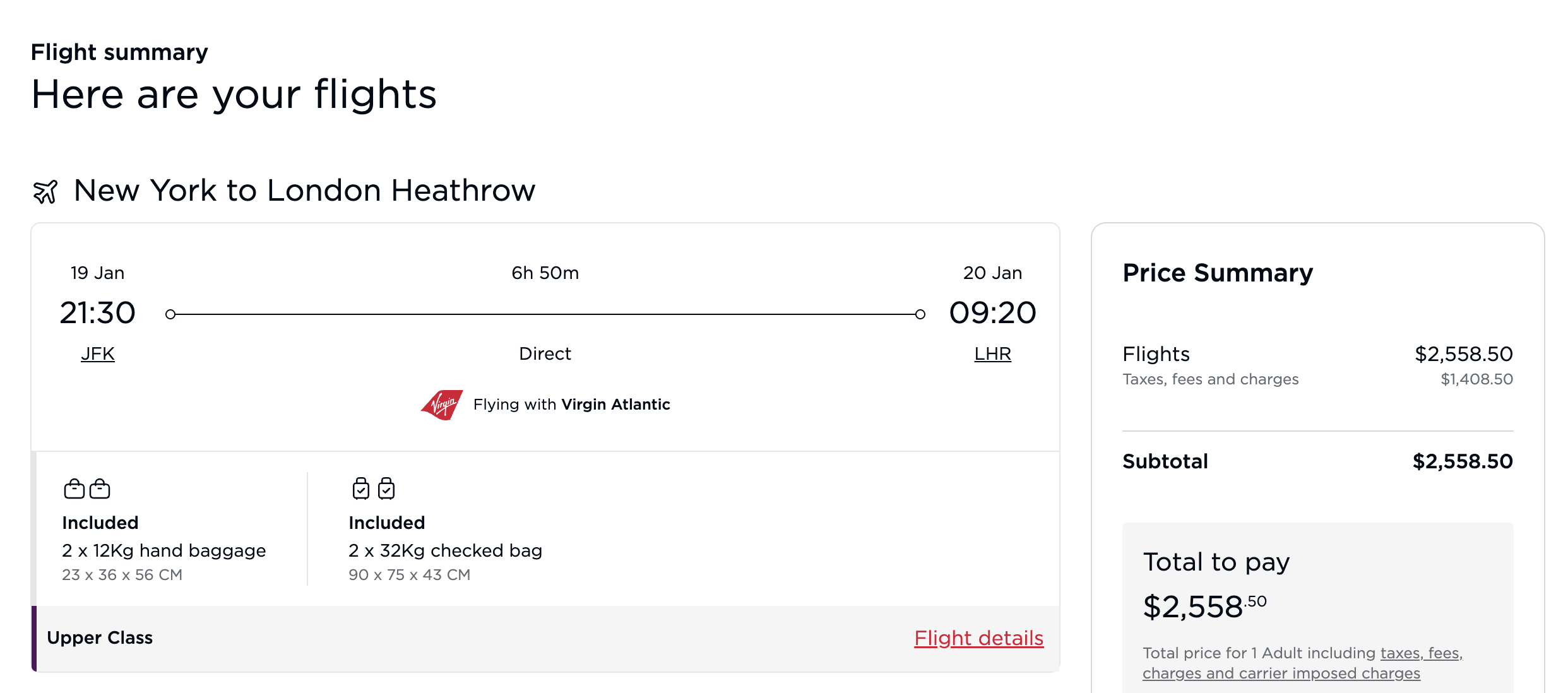
That is where this gets interesting.
For someone who would never pay cash for business class, maybe this still feels expensive. Fair enough. But for the traveler who might actually consider paying for a premium cabin ticket, this is an obvious sweet spot.
You are not just “saving points.” You are replacing a very expensive cash fare with a much lower combination of points and fees.
And it gets even more interesting.
In some cases, Virgin will sell you the points needed for a booking like this. In the example I was looking at, even someone starting with zero Virgin points could buy the points needed for $725, pay the roughly $703 in fees, and end up around $1,428 total.
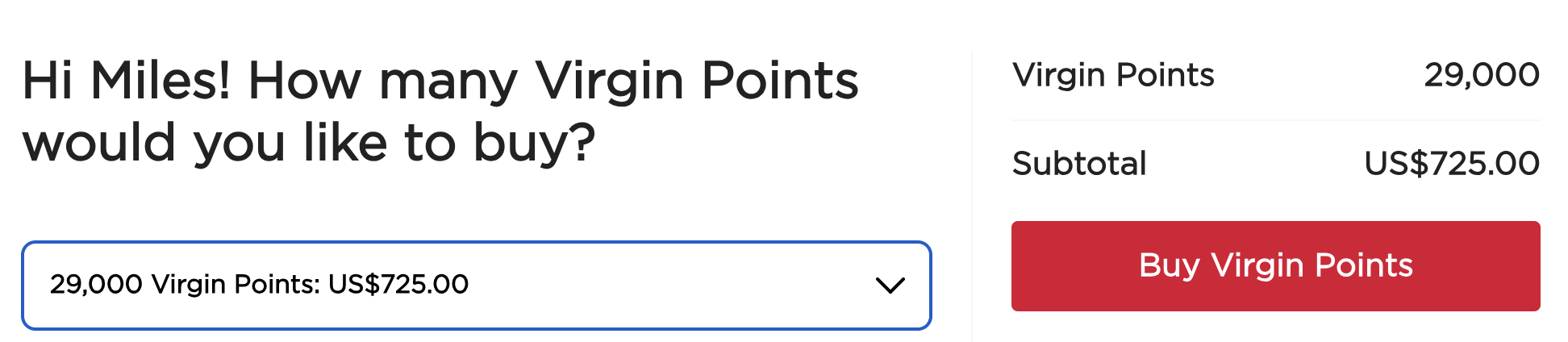
That is still over $1,000 less than the cash fare.
As a disclaimer it’s not always going to work. Buying points speculatively is usually a bad idea. Award space can disappear. Prices can change. Promotions come and go. But when the math works, this is hands down one of the easiest ways to unlock a premium flight at a major discount.
This is a strategy I want to write about more because it is one of the most overlooked parts of miles and points. Sometimes the best move is not just earning points. Sometimes it is strategically buying them when the discount is obvious. This is especially relevant for folks already flying in business and paying cash fares, tricks like these can easily save you thousands without really having to put much into it at all.
Why Chase points are so useful
The reason I like Chase points so much is not because every transfer partner is perfect. They are not.
Aeroplan can have limited first class availability. Flying Blue can have high fees. Virgin Atlantic can have outrageous surcharges.
But Chase points give you options.
That is what makes them valuable.
If Aeroplan has the best first class seat, transfer to Aeroplan. If Flying Blue has the best Europe pricing, transfer to Flying Blue. If Virgin has a strange low-points, high-fee redemption that still beats the cash fare by more than $1,000, transfer to Virgin.
That flexibility is the entire game.
The worst way to use points is to treat them like a gift card with one fixed value. The best way is to treat them like a currency that can be moved into the right program at the right time for the right flight.
That is why I think Chase Ultimate Rewards points are among the best points you can earn.
Used lazily, they are fine.
Used strategically, they can turn into flights that would otherwise cost thousands of dollars.
