ANA Business Class from Tokyo to Brussels: The Long Way from Asia to Europe
In the wake of Russia’s invasion of Ukraine, Russian airspace was closed to most international carriers. Given Russia’s geographic scale and the fact that its airspace covers large portions of the polar routes used by long-haul flights, the impact has been significant.
That was certainly the case on my flight with All Nippon Airways from Tokyo Narita to Brussels. What was once a long but relatively direct routing over Siberia has become an ultra-long-haul journey skirting Russian airspace entirely. Our flight clocked in at just under fifteen hours. For comparison, Chinese carriers are still largely permitted to use Russian airspace, meaning Hainan Airlines’ Shenzhen–Brussels service is roughly two hours shorter than ANA’s Narita departure.
Check-In and Lounge
Despite the longer routing, the ground experience was seamless.
I had booked a somewhat unconventional Aeroplan redemption: NRT–BRU–ORD with a full day layover in Brussels. The check-in agent seemed puzzled and gently suggested that there were much shorter ways to get from Tokyo to Chicago. I explained that the routing was intentional. The redemption value was strong, and it allowed me to compare multiple business class products on a single ticket. Security and immigration at Narita were quick, and I made my way to the ANA Business Class Lounge near Gate 52.
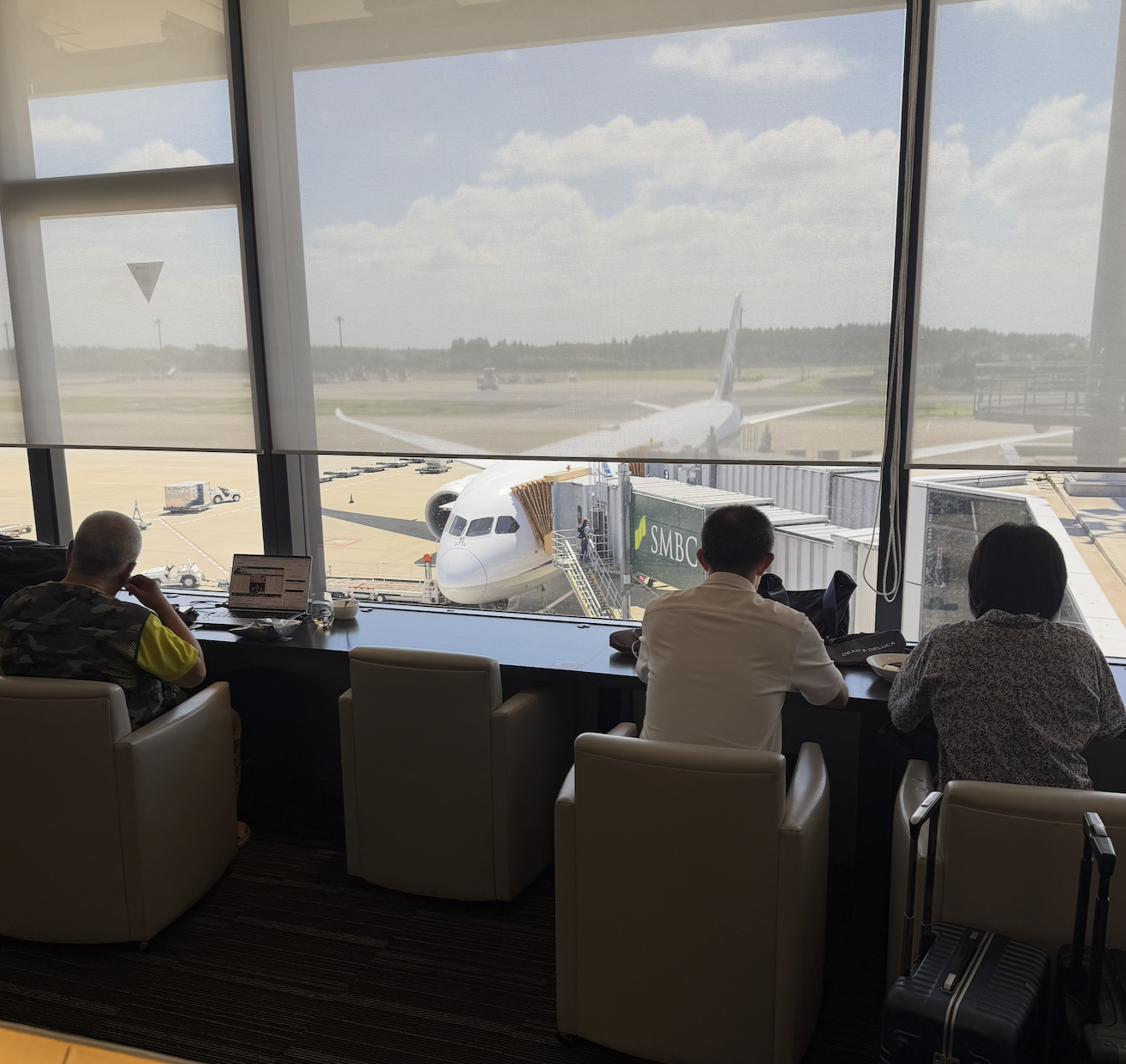
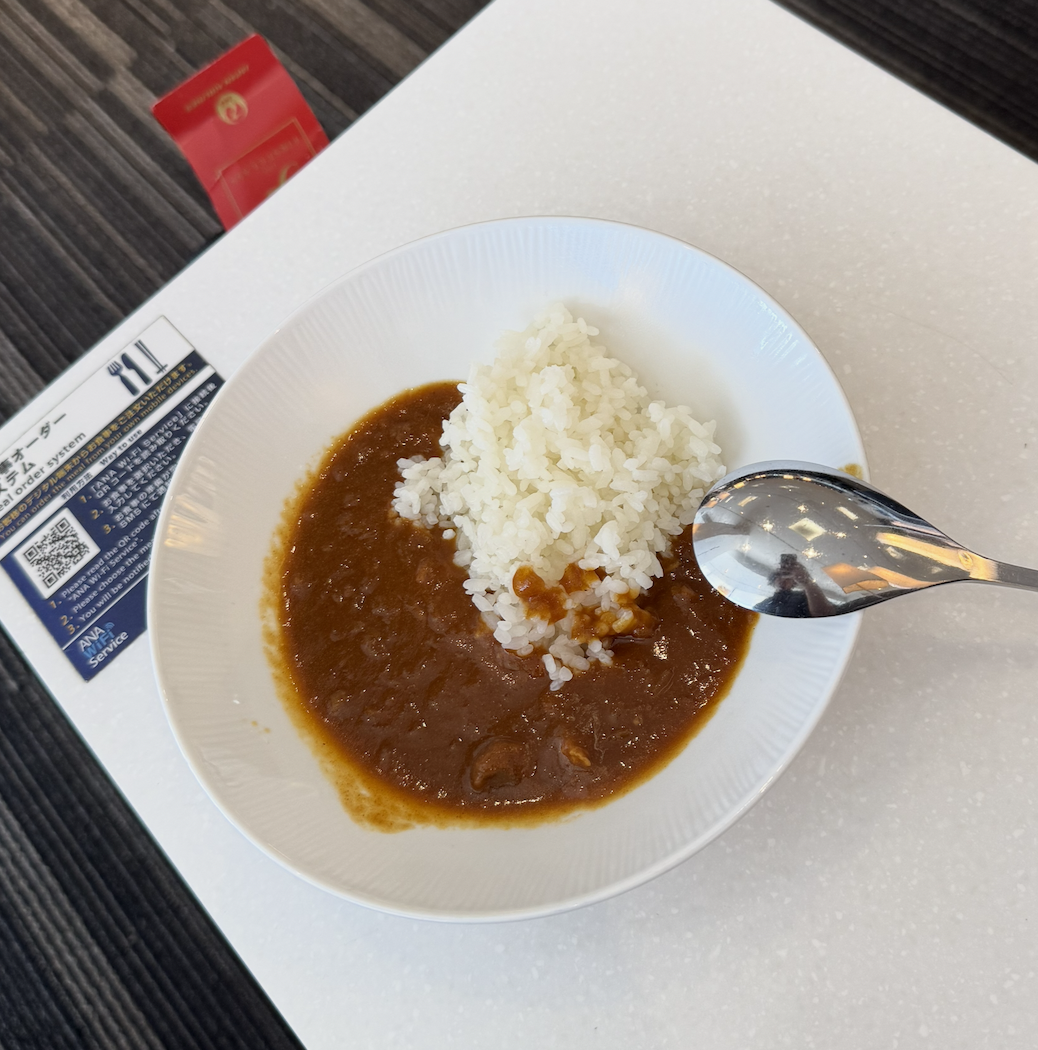
The lounge is spacious, quiet, and functional. There is a solid hot food buffet, desserts, and ANA’s well-known made-to-order noodle bar. While everything was clean and well-run, the space felt slightly sterile to me. It had the efficiency of a corporate breakroom in a Manhattan high-rise. Comfortable, yes. Memorable, not particularly.
What redeems the space entirely are the views. The lounge overlooks the tarmac with expansive sightlines, making it a dream for anyone remotely interested in aviation. After a light bite and a shower in one of the well-appointed shower suites, I headed to the gate.
The Seat
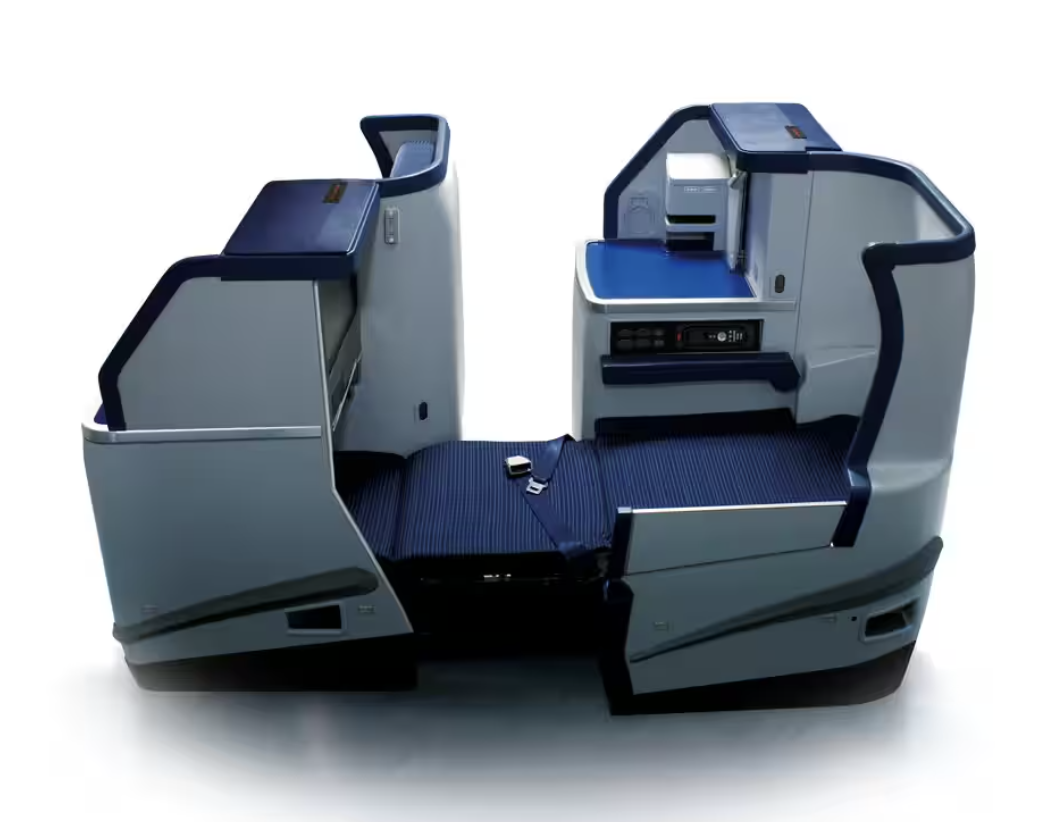
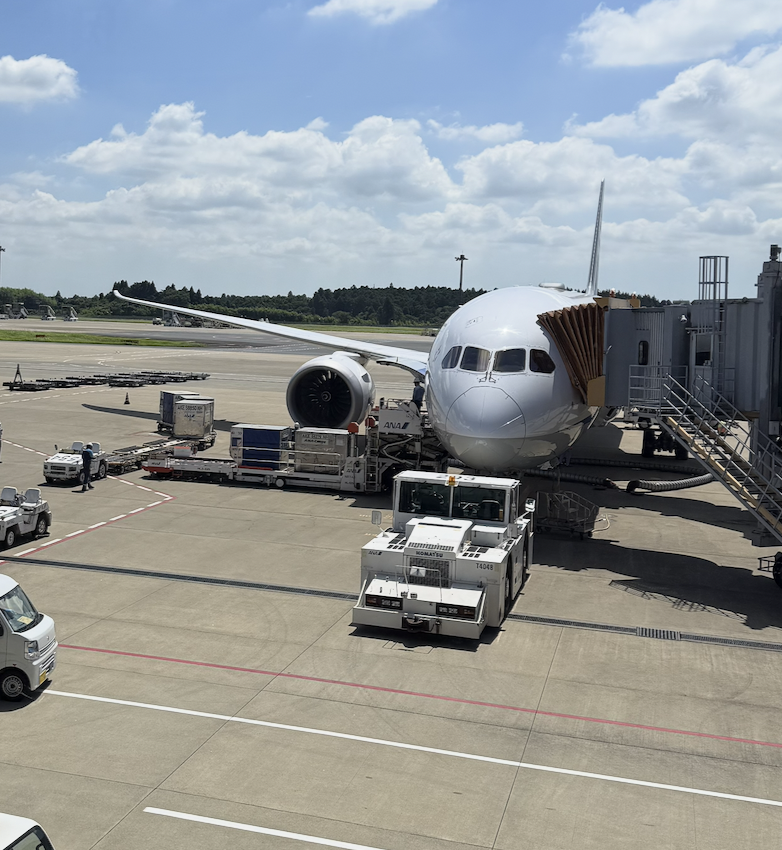
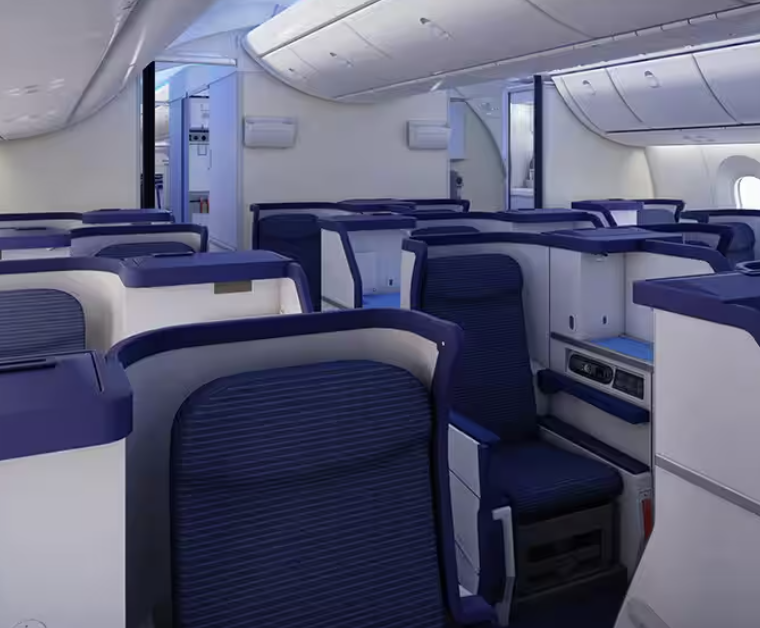
Today’s aircraft was a five-year-old Boeing 787-9 featuring ANA’s standard staggered business class product. This is not ANA’s newest “The Room” suite, which is currently reserved for select 777 aircraft, but it remains competitive.
The seat is comfortable but somewhat narrow by today’s standards. My seat was positioned closer to the aisle rather than directly against the window, which reduced privacy slightly. Even so, the product was perfectly functional for a long flight.
With ANA, the hardware has rarely been the headline. The soft product is where they consistently excel, and I was optimistic that would once again be the case.
Service and First Meal
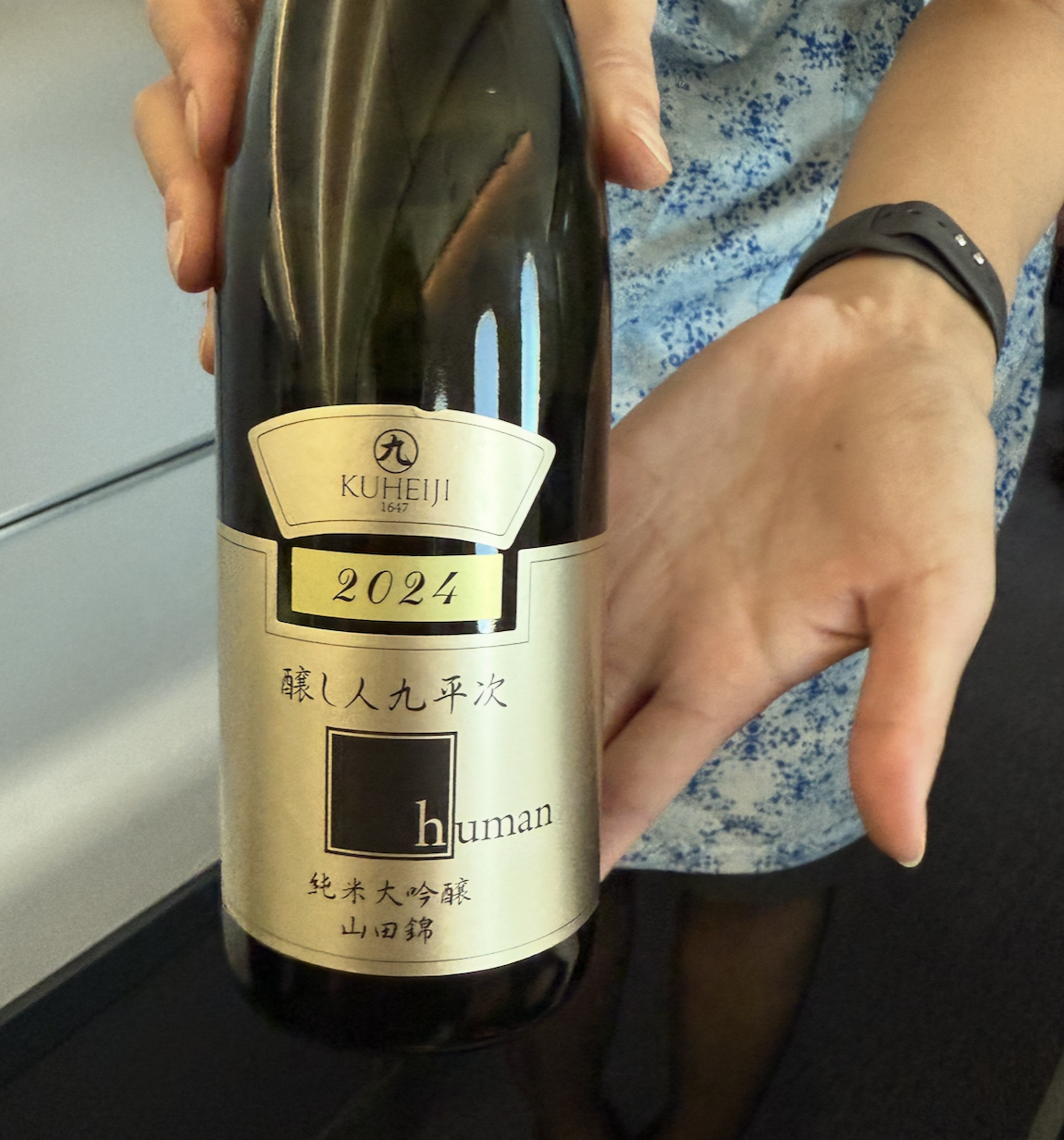
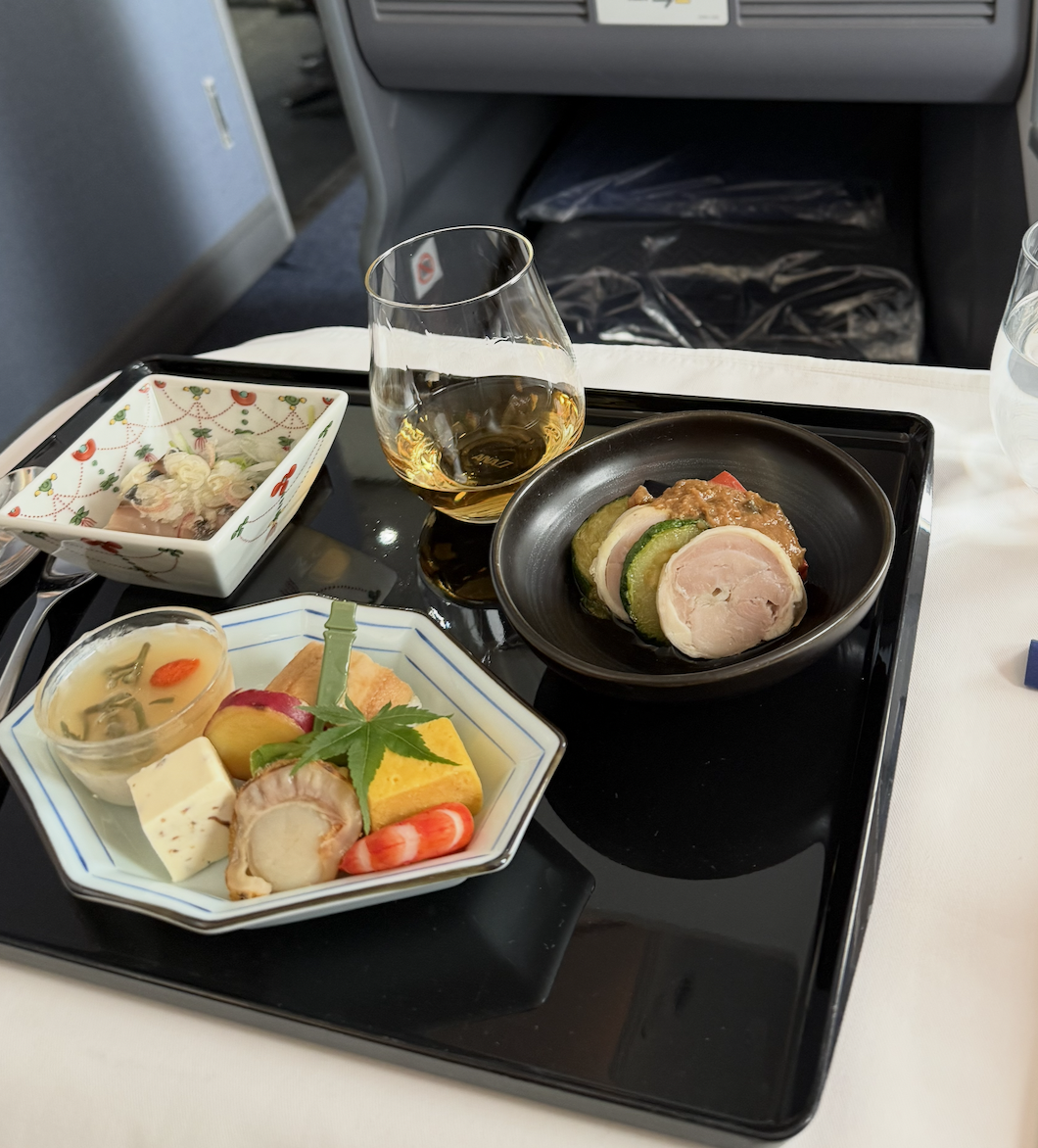
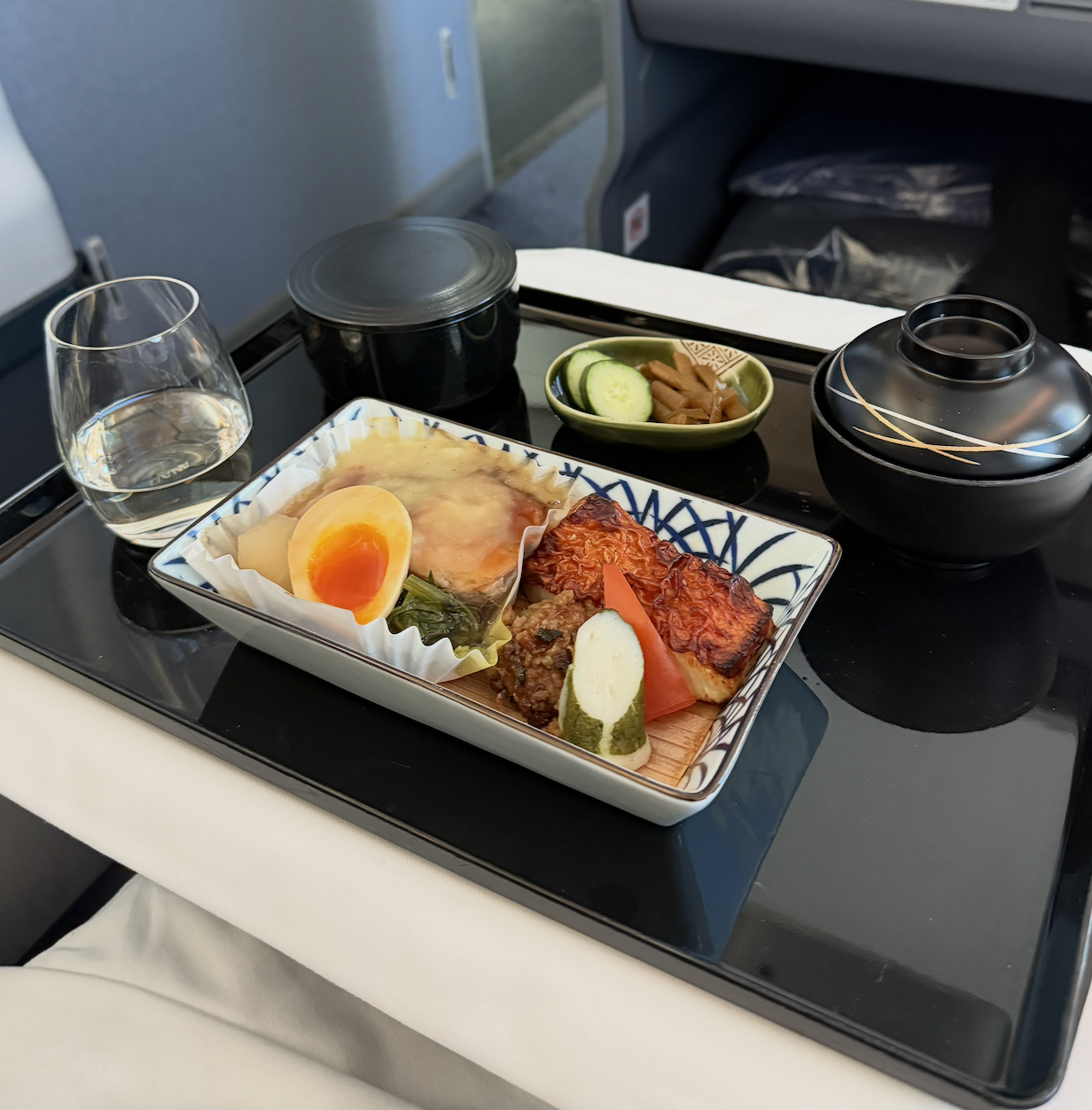
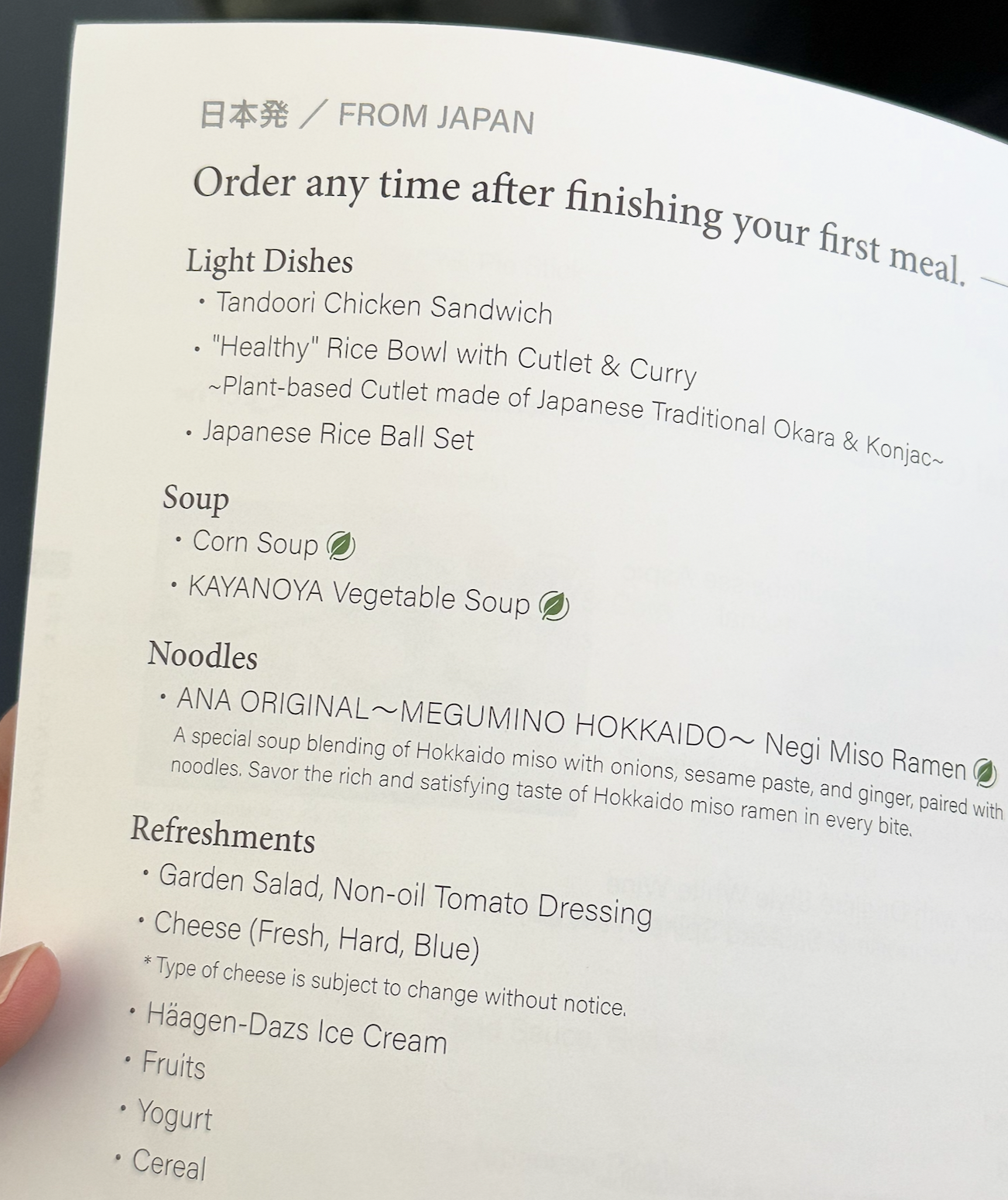
Shortly after settling in, the flight attendant assigned to my section introduced herself and took a moment to confirm the pronunciation of my name. It is a small detail, but one that reflects ANA’s polished service culture. The menu was extensive, offering both Japanese and Western options for each main meal, along with an anytime dining menu. I selected the Japanese option for the first meal and the Western option for the second, intending to sample both.
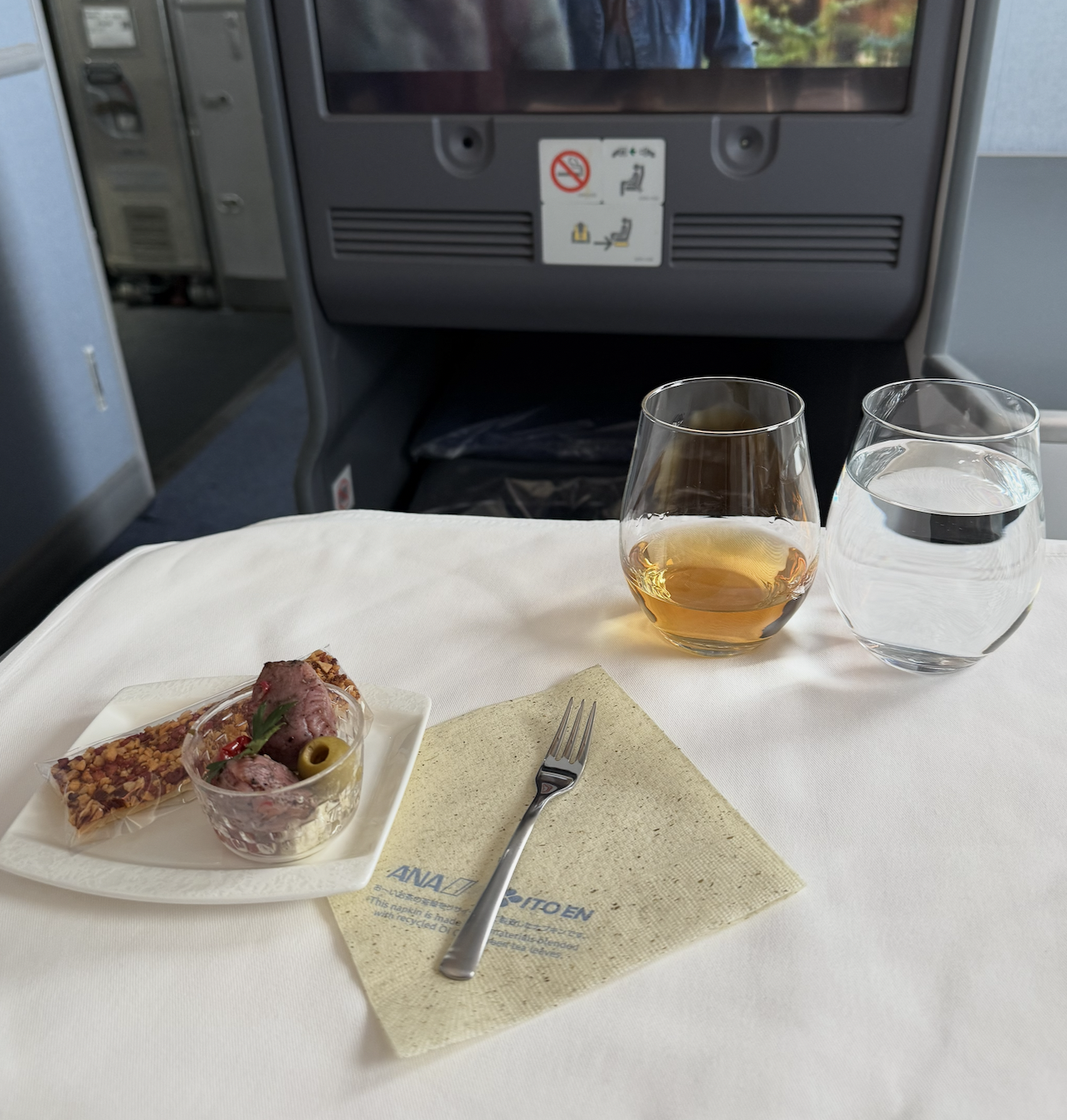
Pajamas were distributed before departure. ANA’s are among my favorites. Understated and minimal, they feel like a comfortable beige tracksuit. Practical, not flashy. After takeoff, we followed a northerly route toward Alaska. Meal service began with an amuse-bouche of marinated shrimp, olives, and cheese. The olives, surprisingly, were my favorite.
The Japanese meal unfolded in traditional kaiseki style. The zensai course featured an elegant assortment of small bites: simmered black soybeans, bamboo shoot with bonito flakes, a potato and cheese bite with plum paste, and alfonsino sushi. Each was carefully plated and thoughtfully seasoned. Two kobachi courses followed. The first was vinegar-cured young sea bream with pickled vegetables. The second, a warm dish of simmered chicken and vegetables with deep-fried taro.
The main course included simmered wagyu beef with yuba and grilled sablefish marinated in sake lees. It was served alongside steamed rice, miso soup, and Japanese pickles. Every element felt deliberate and refined. Dessert was modest but satisfying. Afterward, the crew helped convert the seat into a bed, and I slept soundly for several hours.
Over the Arctic

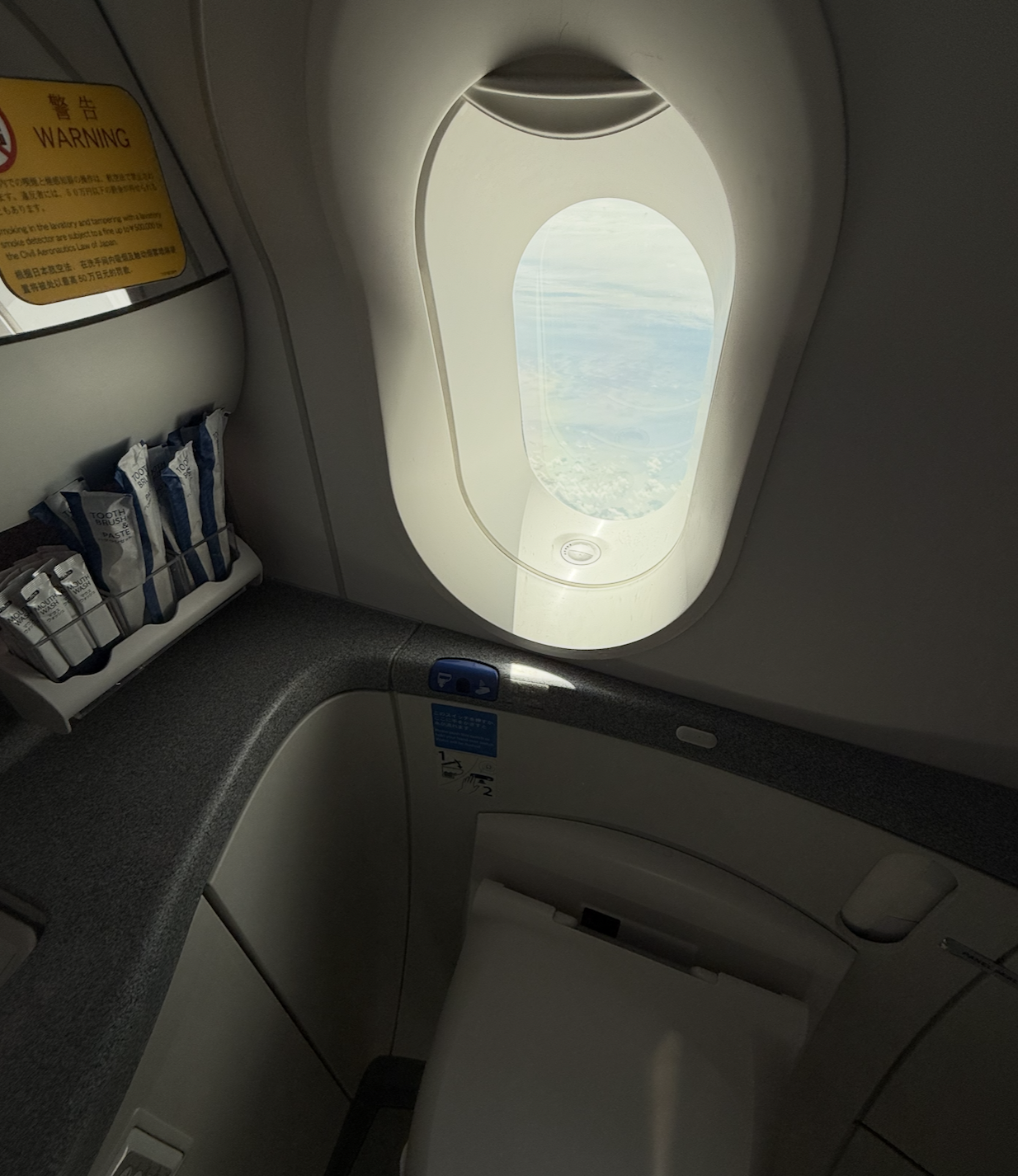
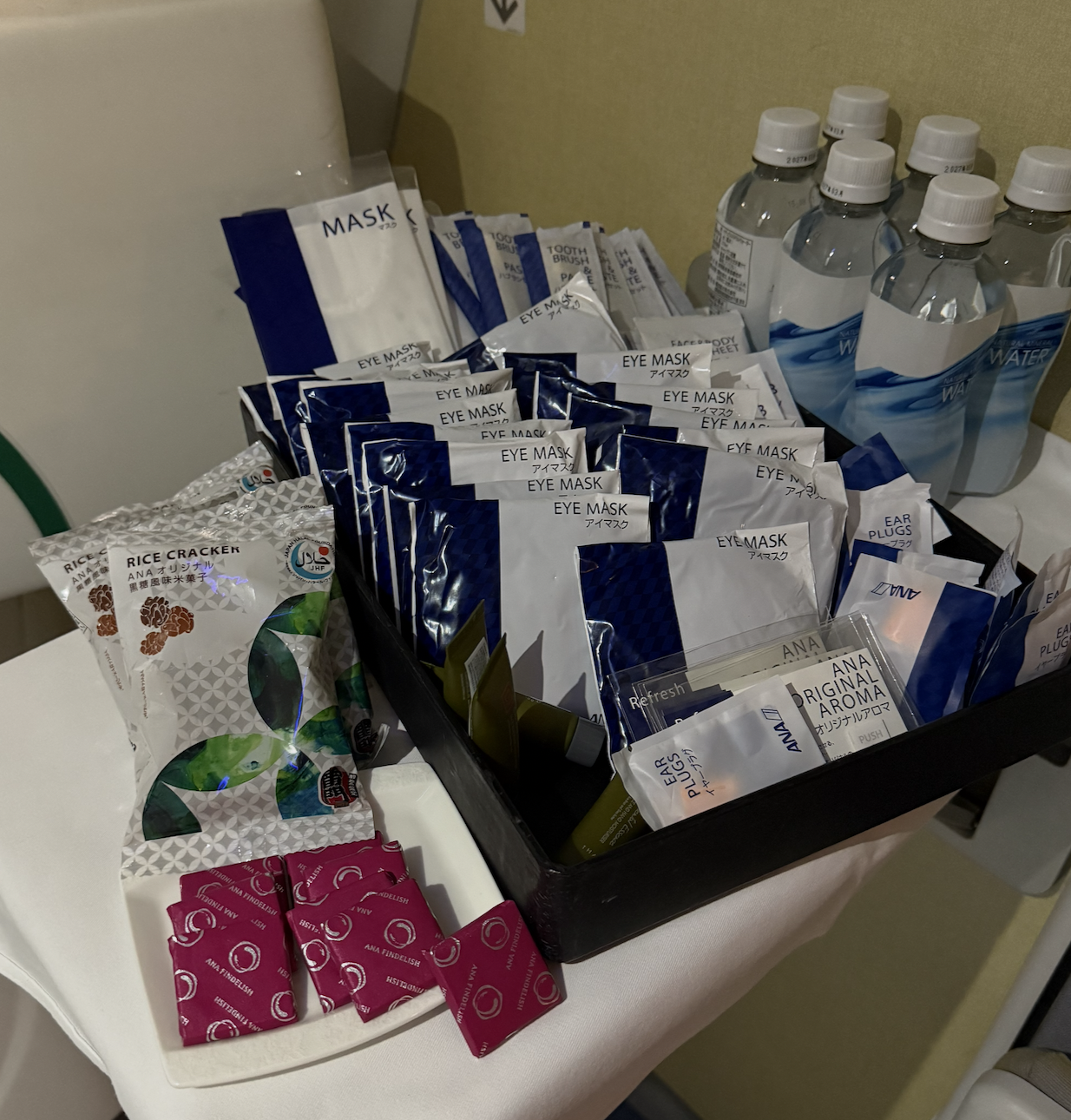
When I woke, we were deep into our polar crossing. Looking out over vast expanses of ice and snow was surreal. Few places on Earth feel as remote. I decided to explore the dine-anytime menu and ordered all three available options.
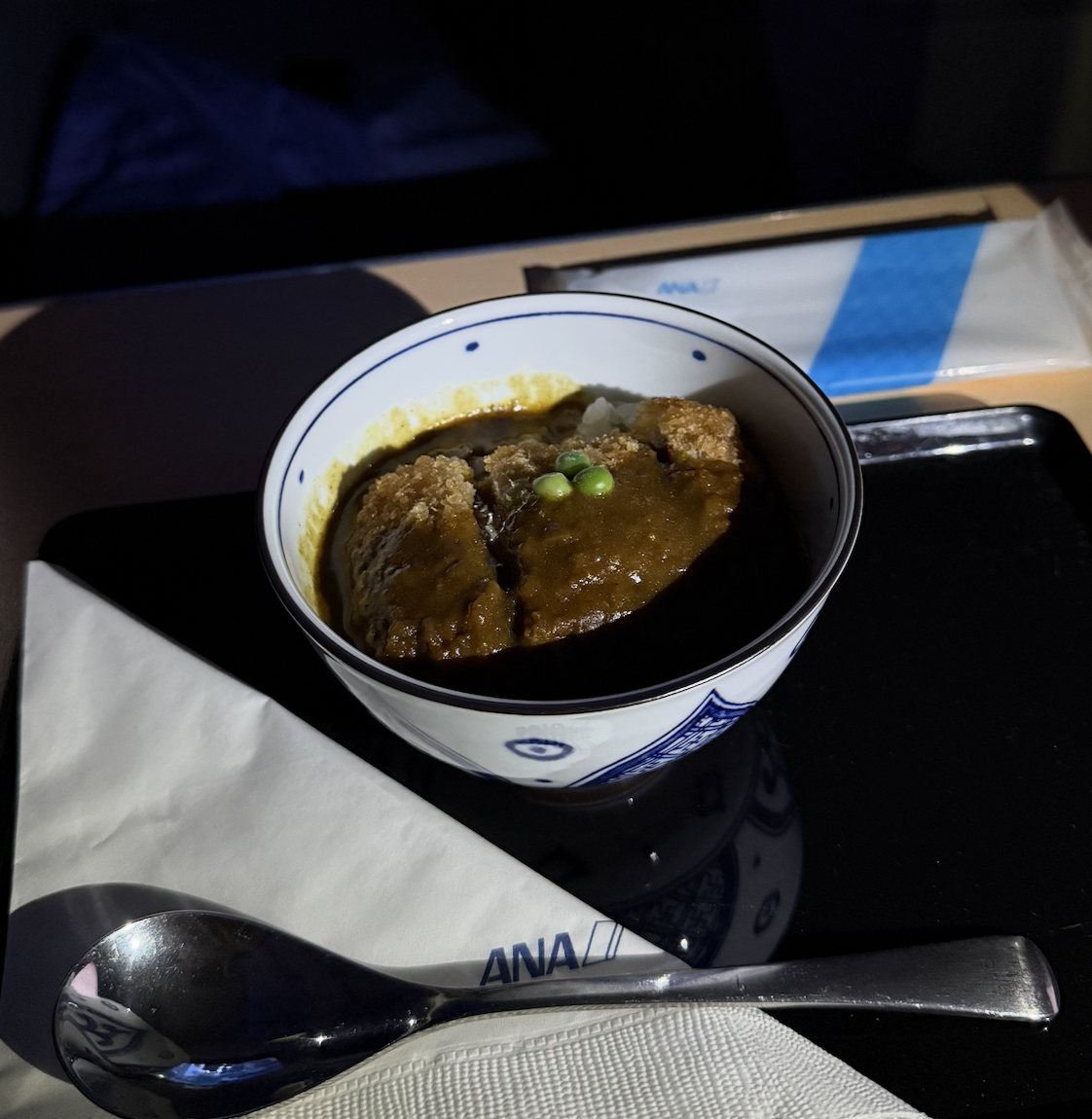
The “healthy” rice bowl with plant-based cutlet and Japanese curry was excellent. Warm, comforting, and ideal while watching the Arctic landscape below.
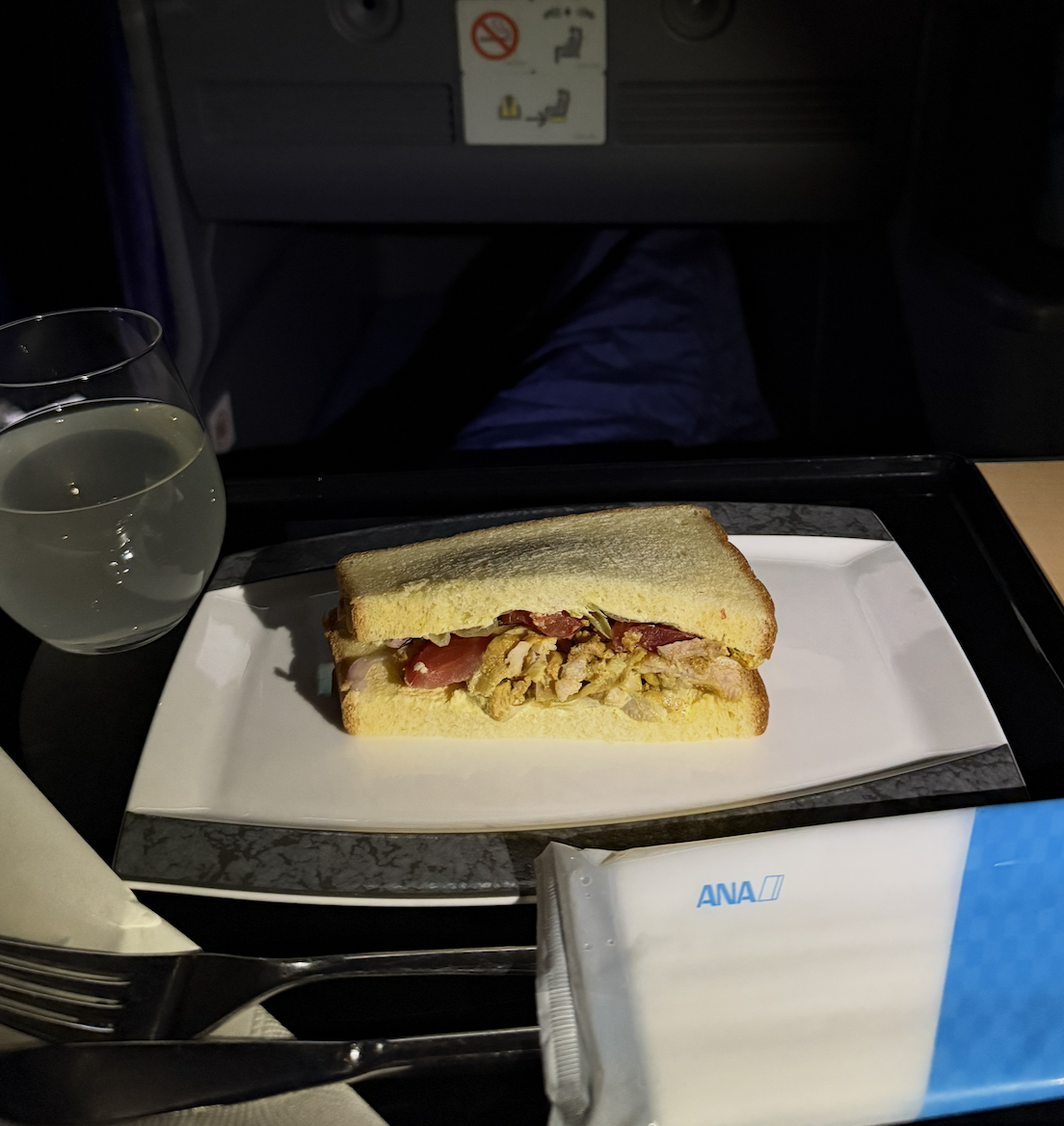
The tandoori chicken sandwich was my least favorite. It was well-prepared but slightly dry, and the texture did not quite work for me.
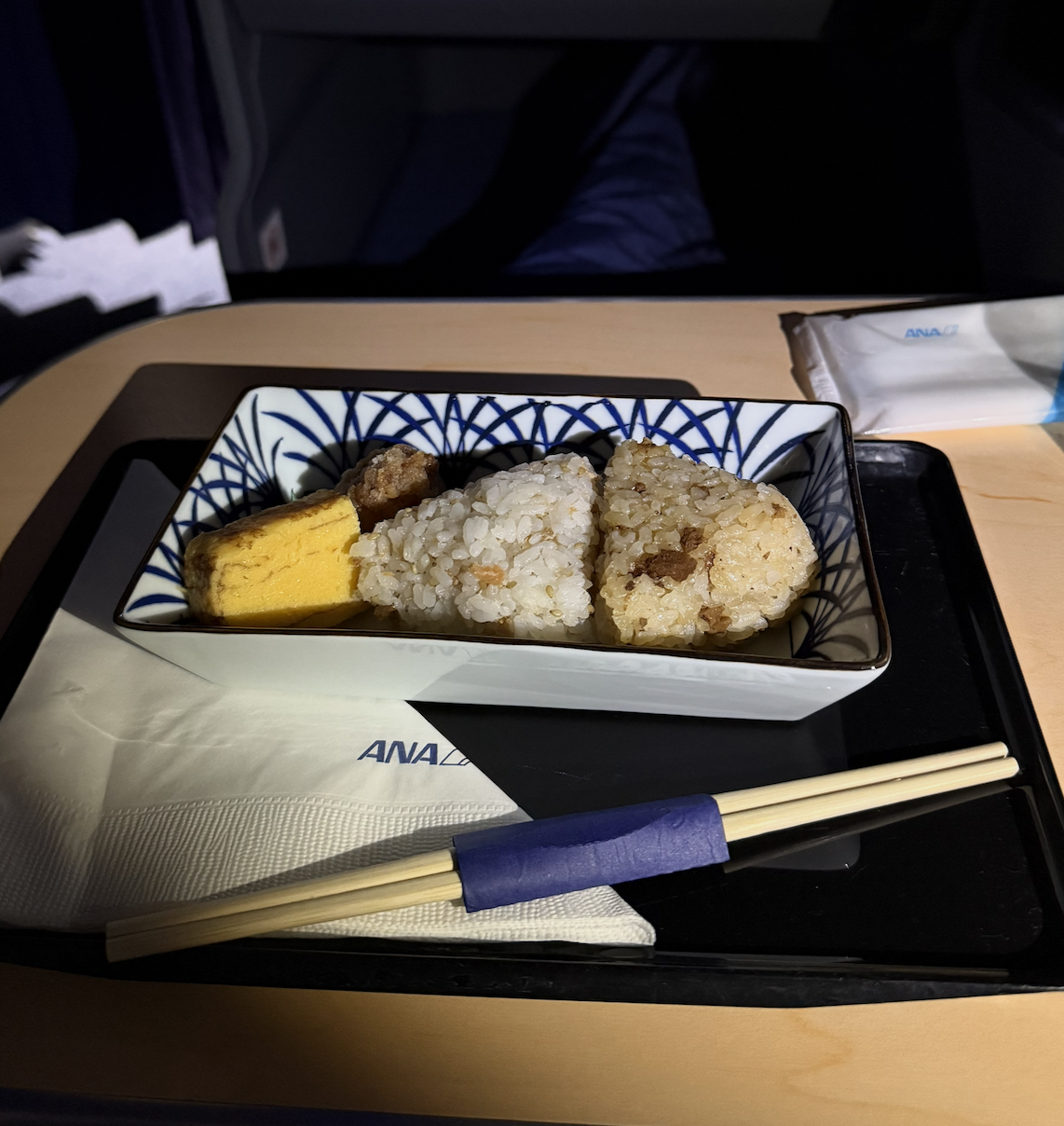
The “rice balls” were simple and satisfying. Technically triangular prisms rather than balls, but excellent nonetheless.
Time passed quickly with a mix of inflight entertainment, intermittent Wi-Fi that struggled over the pole, and the ever-changing view outside.
Second Meal
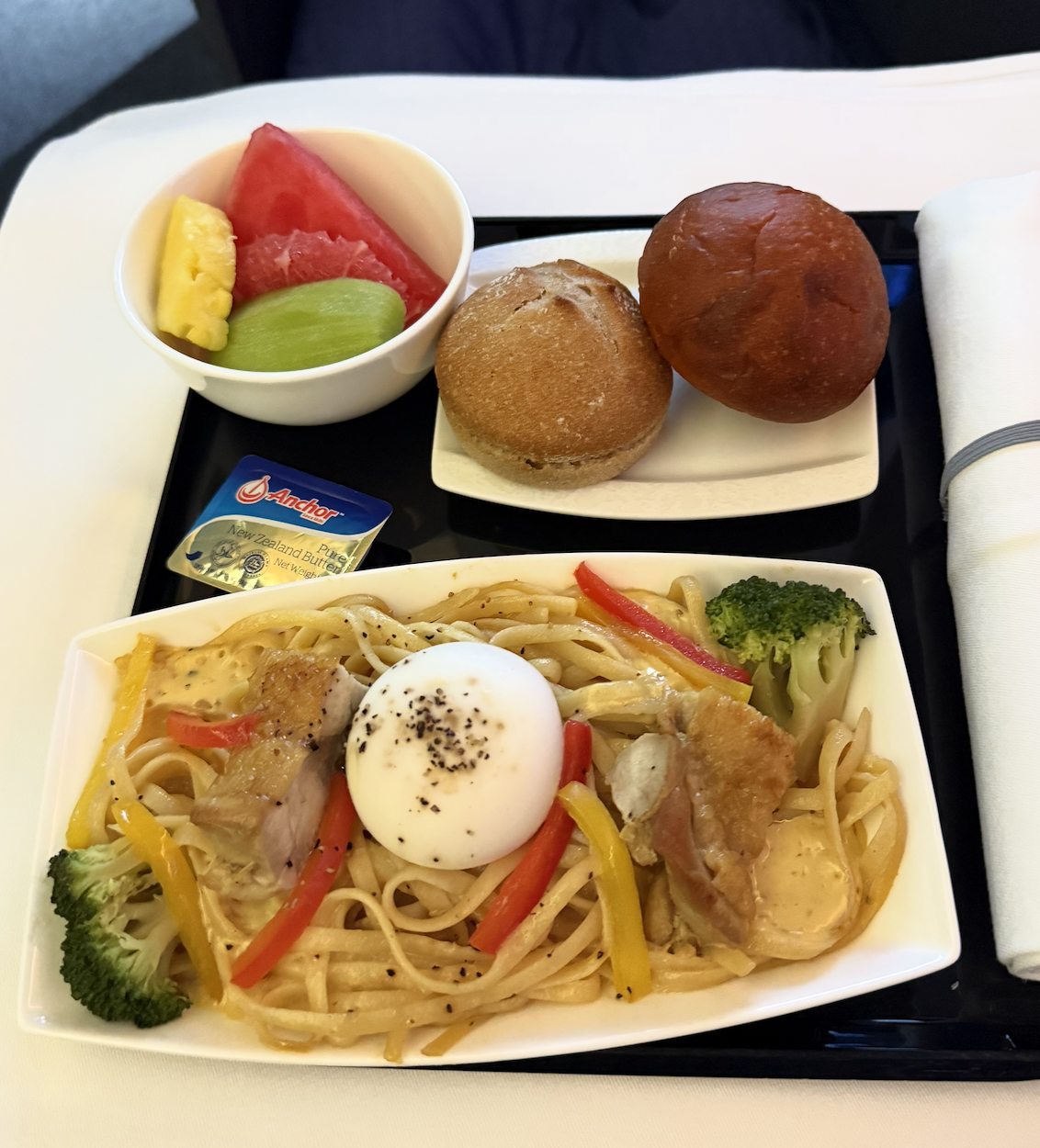
For the second meal, I opted for the Western selection.
It reinforced a consistent rule of thumb: when flying a Japanese airline, choose the Japanese meal.
The pasta was creamy and pleasant but unremarkable. The bread and fruit were standard. Nothing was poorly executed, but nothing stood out. In contrast to the first meal, it felt generic.
Final Thoughts
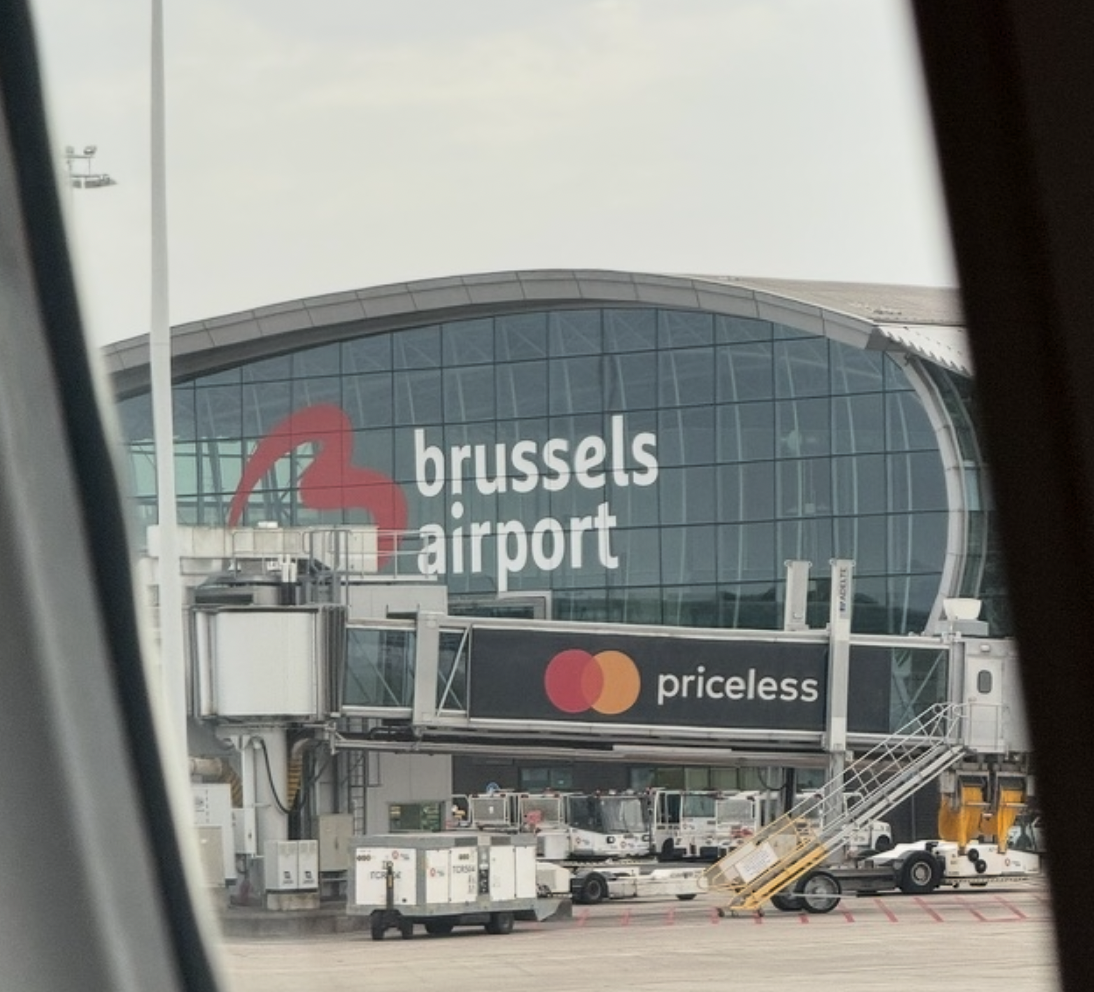
We descended into Brussels after nearly fifteen hours in the air.
This flight reaffirmed my view that ANA remains one of the world’s top airlines. The hard product may not be cutting-edge, but the service, attention to detail, and especially the Japanese meal service elevate the experience significantly.
When hardware and soft product are in contrast, I tend to value the latter more. On this ultra-long-haul routing around Russian airspace, ANA delivered where it matters most.
