Al Safwa Review: My Favorite Airport Lounge
Airport Lounges
Airline lounges come in many shapes and sizes. In the United States, most travelers are familiar with airline-operated lounges tied to the three legacy carriers, each of which runs a two-tier system.
The first tier is broadly accessible via domestic first class tickets, airline elite status, or premium credit cards. These include American Admirals Clubs, United Clubs, and Delta Sky Clubs. Across the board, you can expect complimentary food and drinks, seating to relax or work, and occasionally showers or private workspaces. Quality varies significantly by location. Smaller outstations may offer very little, while flagships like Delta’s LAX Sky Club rank among the best domestic lounges in the country. Overall, Delta’s product tends to edge out the competition, but the experience remains fundamentally utilitarian.
The second tier is far more exclusive and markedly better. These lounges are typically reserved for international premium cabin passengers departing from major hubs. Examples include United Polaris Lounges, American Flagship Lounges, and Delta One Lounges. Here, the experience shifts meaningfully: à la carte dining, improved privacy, elevated service, and a noticeably calmer atmosphere.
There are many other lounge categories beyond this, including contract lounges and credit card lounges, which we cover in detail elsewhere. But today, I want to focus on one lounge in particular. My favorite airport lounge in the world: Qatar Airways’ Al Safwa First Class Lounge in Doha.
Al Safwa Is Different
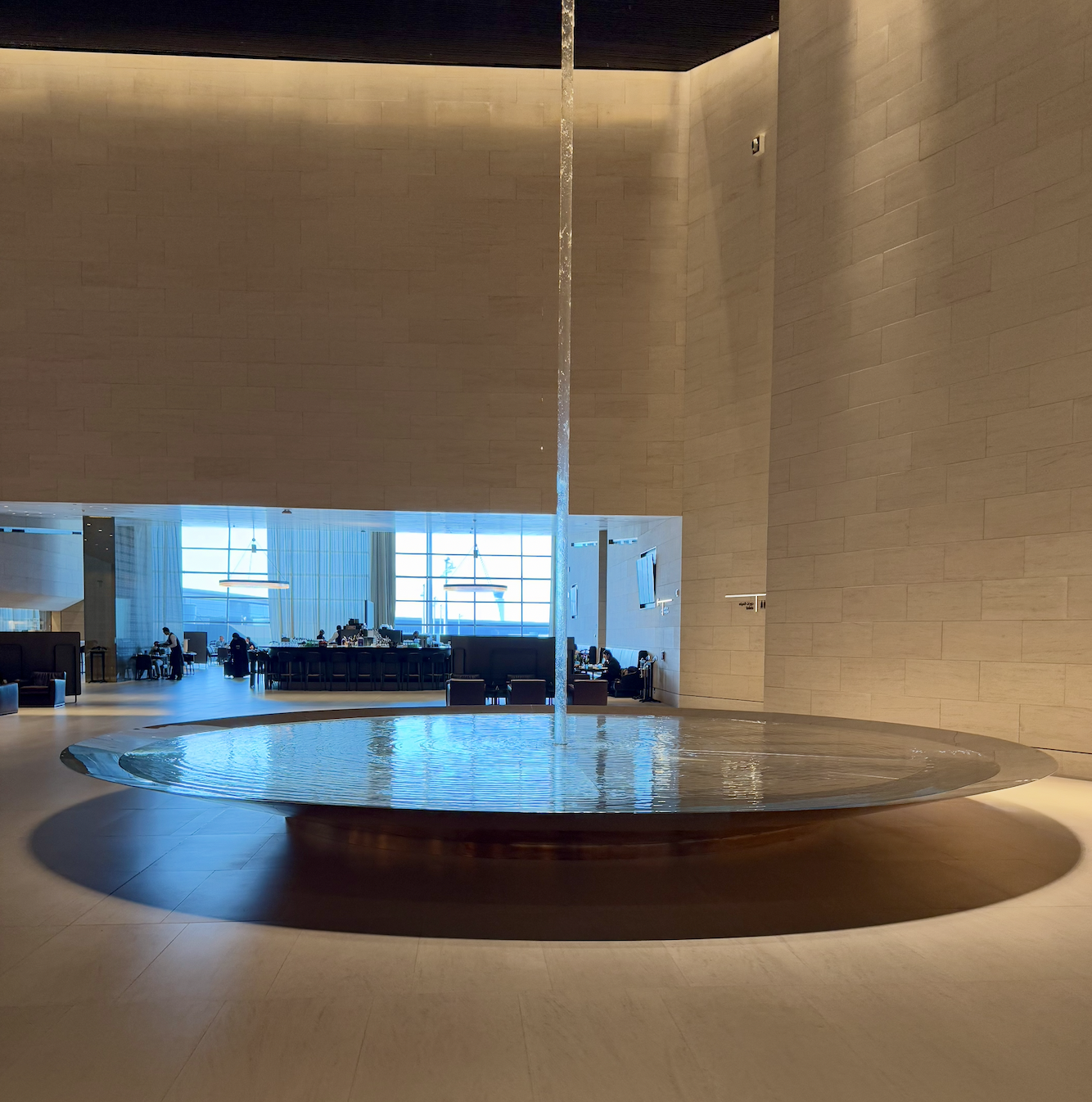
Al Safwa’s central fountain
Unlike its Middle Eastern neighbors, Qatar Airways operates a surprisingly small First Class footprint. Emirates offers First Class on nearly every aircraft. Etihad, while shrinking its footprint, still maintains a visible presence. Qatar, by contrast, offers First Class on only a handful of routes.
Currently, First Class is available on Qatar’s Airbus A380 fleet and a small number of Boeing 777-300ERs (many of which are leased from Cathay Pacific). In total, Qatar operates roughly 100 First Class seats across a fleet of more than 250 aircraft.
Despite this limited First Class availability, Qatar’s business model relies on Doha as a global mega-hub, connecting nearly every region of the world through Hamad International Airport. As a result, the ground experience is exceptional. Al Safwa does not merely compete with other lounges. It completely eclipses them.
Getting In
The most straightforward way to access Al Safwa is with a First Class ticket on Qatar Airways or another oneworld partner. There is, however, a second and often overlooked path: regional Qatar Airways flights marketed as “First Class.”
These short-haul routes, typically operated by narrow-body aircraft, carry a First Class designation despite offering a product closer to a North American-style domestic first seat. Regardless of onboard reality, the boarding pass grants full access to Al Safwa.
For passengers originating in Doha, the experience is seamless. First Class check-in leads to a private security and immigration channel that deposits you directly into the lounge. On certain bus-gate departures, First Class passengers are even driven directly from the lounge to the aircraft. On my most recent visit, I went from curb to seat without ever stepping into the public terminal. Whether that is desirable is debatable, given how impressive Hamad International Airport is, but the exclusivity is undeniable.
Connecting passengers can access the lounge via escalator or elevator. It is located on the southern end of the terminal’s third floor.
Dining
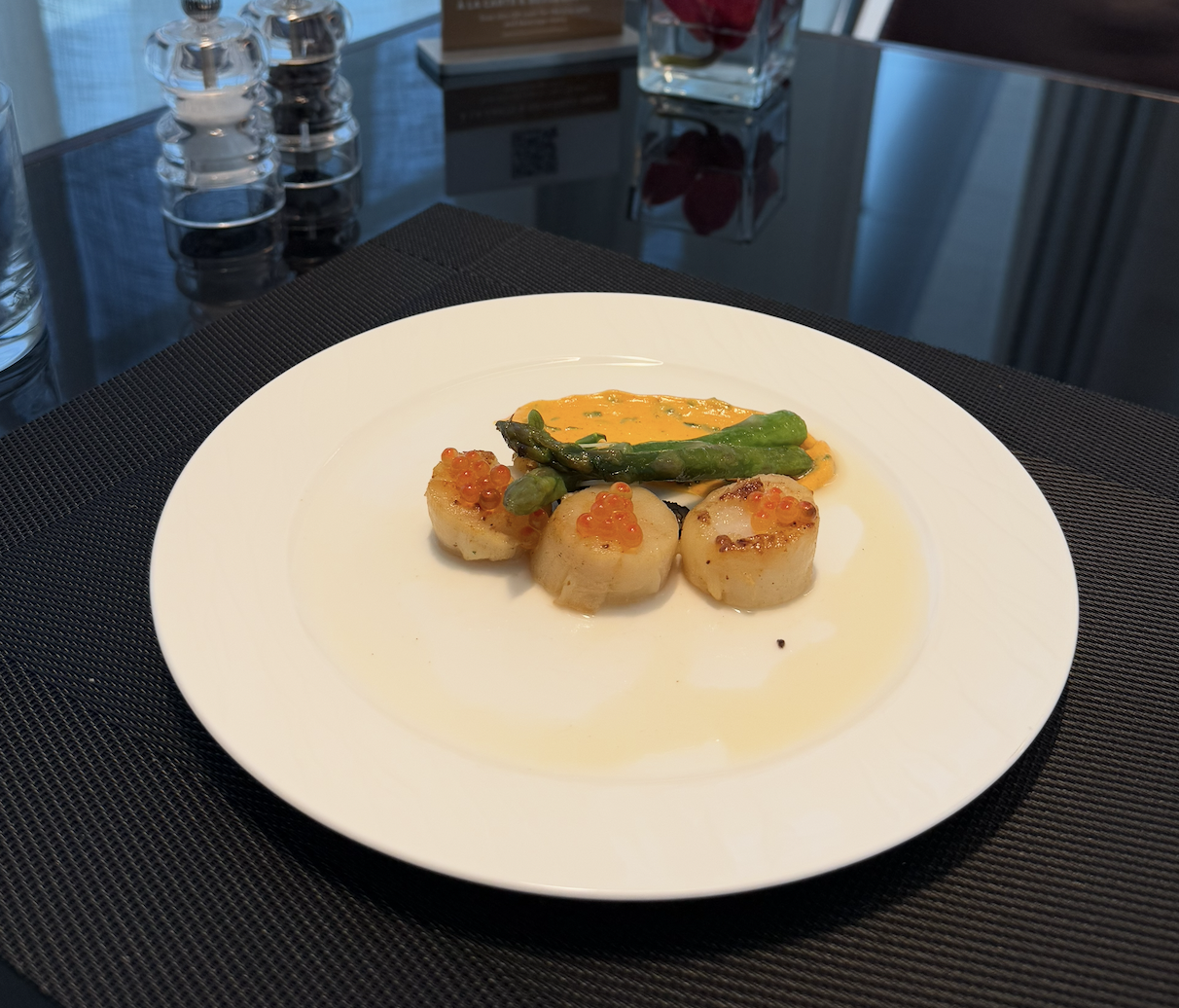
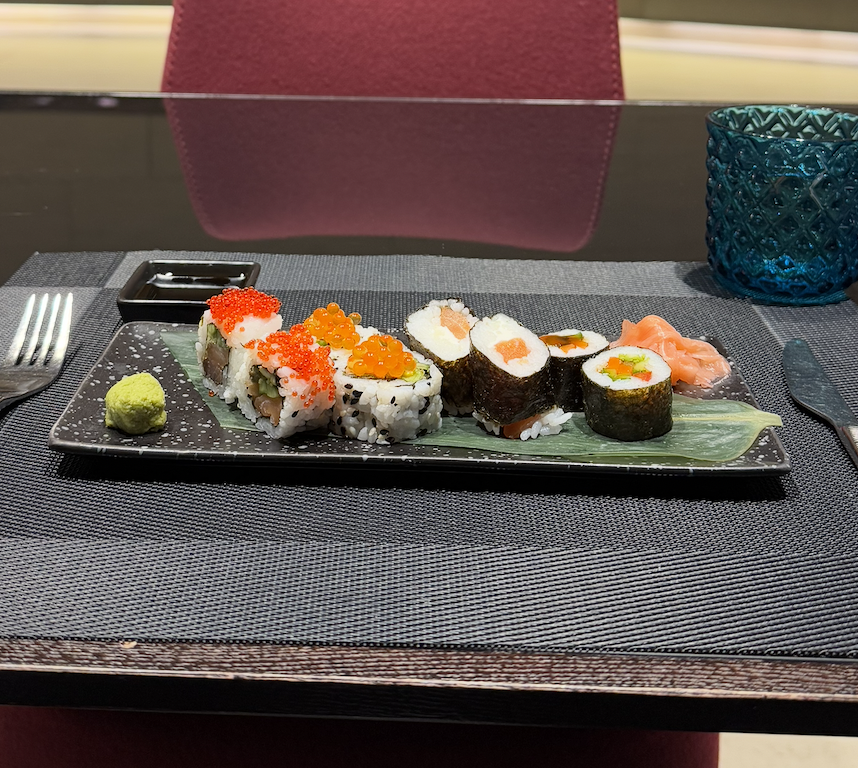
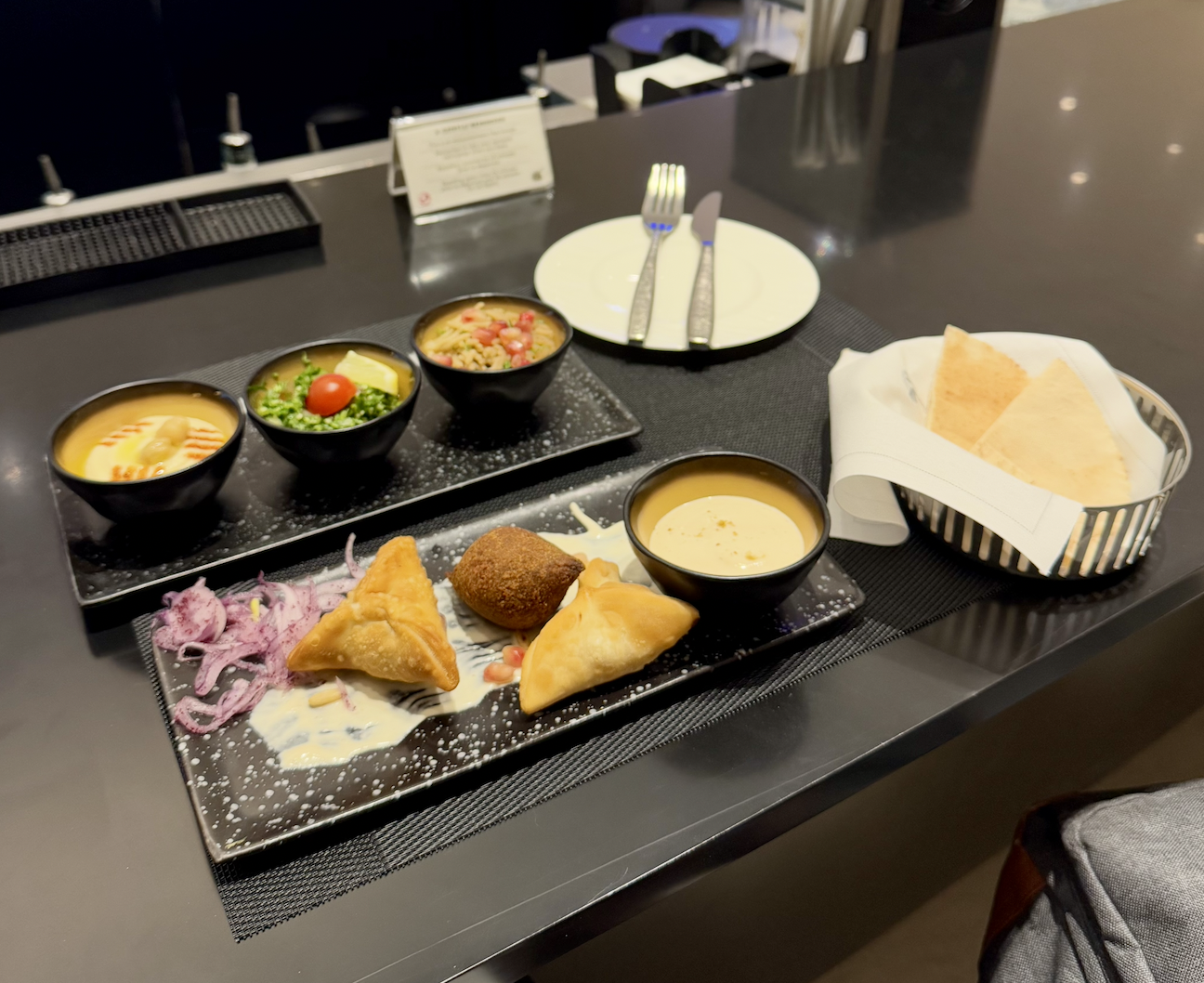
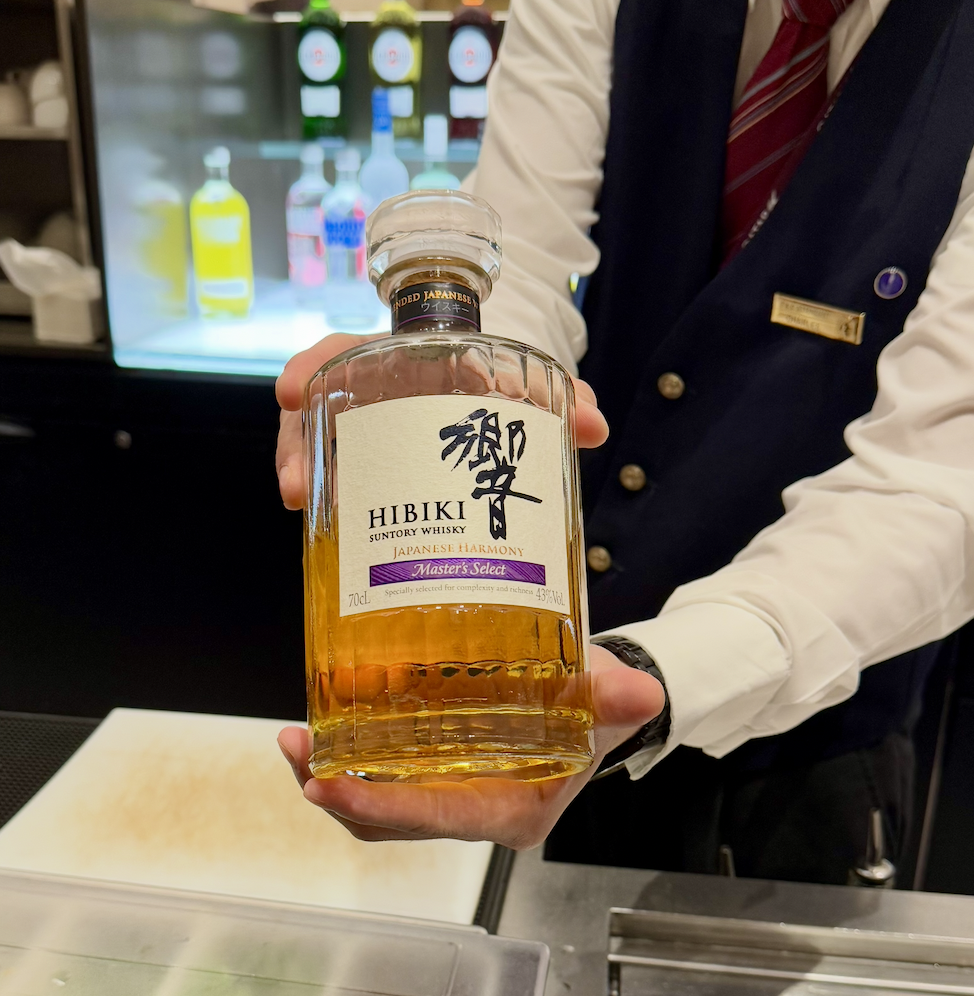
Food is the single most important lounge metric for me, and this is where Al Safwa excels.
Dining here would not feel out of place in a high-end restaurant in a major global city. The menu is extensive to the point of excess, including multiple cuisines and eight separate egg preparations alone. Standouts include the Arabic mezze, which feels obligatory in the region, and the scallops, which are consistently excellent.
In addition to à la carte dining, the lounge features buffet-style stations and a sushi bar where chefs prepare rolls to order. This is not lounge food masquerading as fine dining. It is simply very good food.
The beverage program is equally strong, with an impressive spirits selection and thoughtfully crafted specialty cocktails. Champagne and wine offerings are among the best you will find in any airport lounge worldwide.
Other Amenities
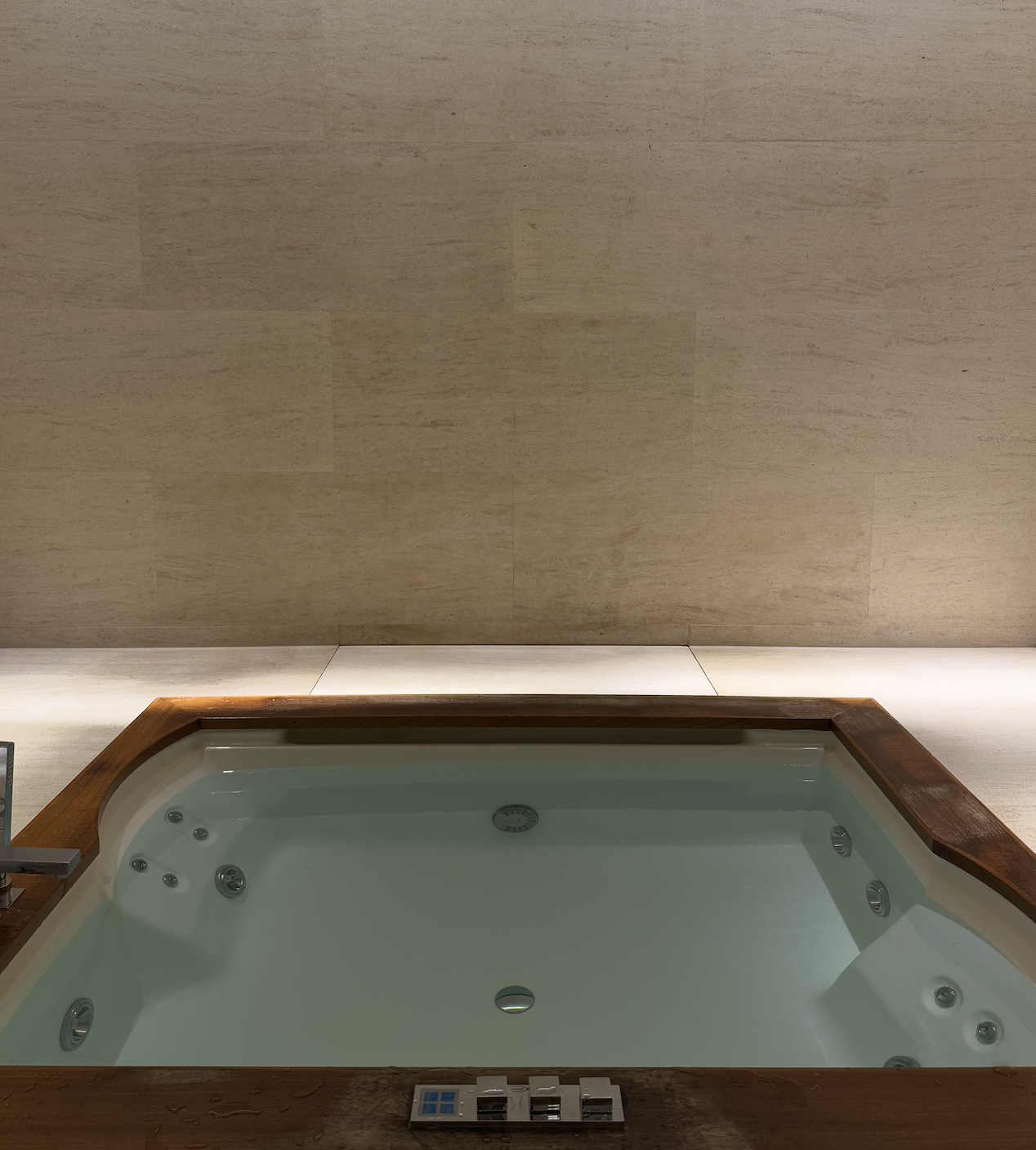
The spa is one of Al Safwa’s defining features. While most treatments are paid, guests can reserve a private hot tub suite at no cost. Each suite includes showers stocked with Diptyque products and offers a level of calm that feels almost surreal inside an airport.
This tranquility, however, also highlights one of Al Safwa’s few drawbacks. The space is visually stunning and monumental in scale, but that grandeur creates an atmosphere that is more reverent than relaxed. At times, the lounge feels less like a place to unwind and more like an ultra-luxury museum or library. Conversation happens in hushed tones. Movement feels deliberate.
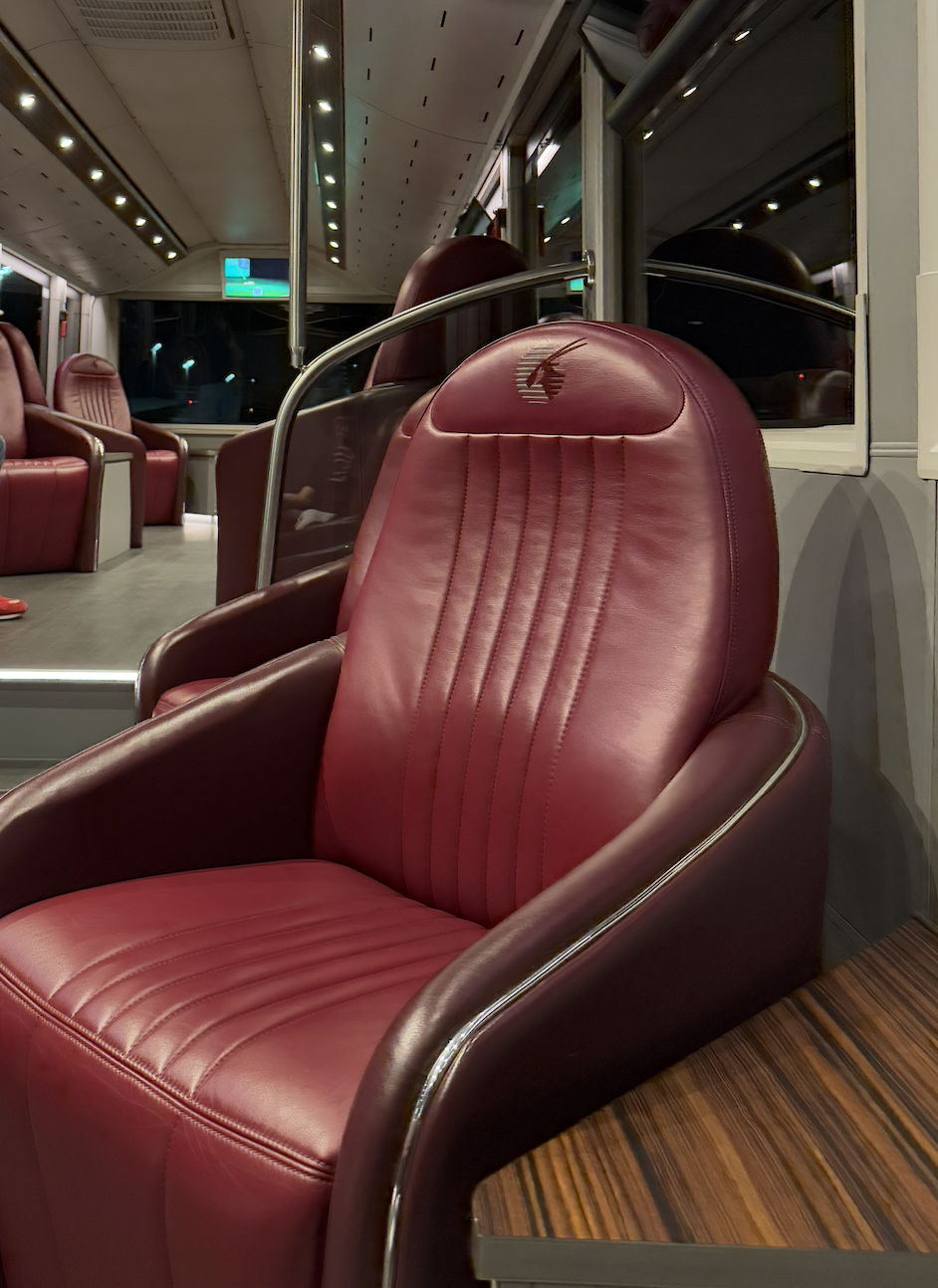
This contrasts sharply with Emirates, whose lounges and onboard experience often feel celebratory and energetic. Qatar’s approach is the opposite. Everything is restrained, controlled, and intentionally understated. That philosophy is reflected in everything from the color palette to the service style.
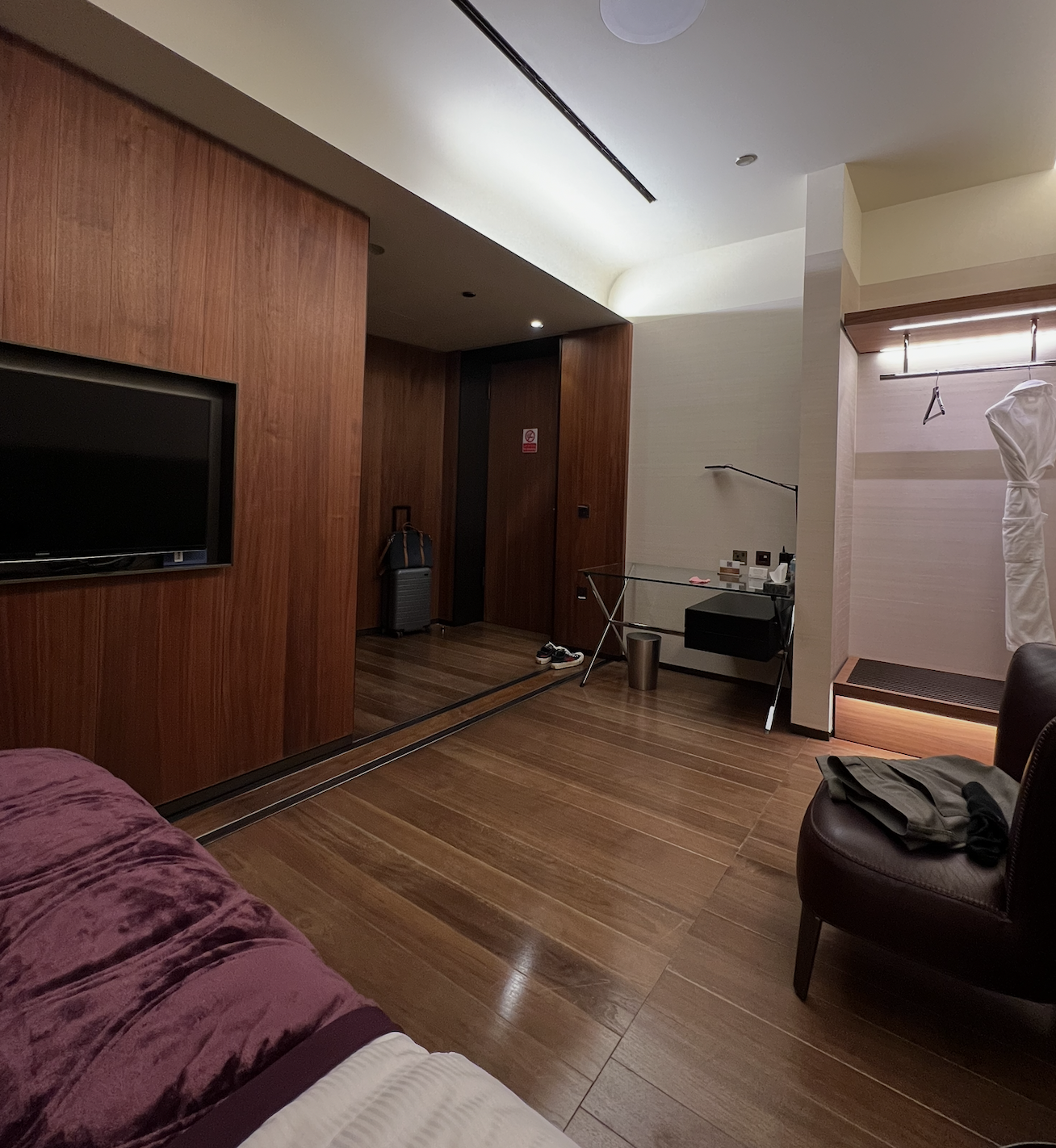
Another standout amenity is the set of private bedrooms. There are roughly a dozen, each equipped with a bed, television, desk, and en-suite bathroom with shower. These rooms are ideal for long layovers and are complimentary, though availability is not guaranteed. While officially limited to six hours, enforcement appears flexible.
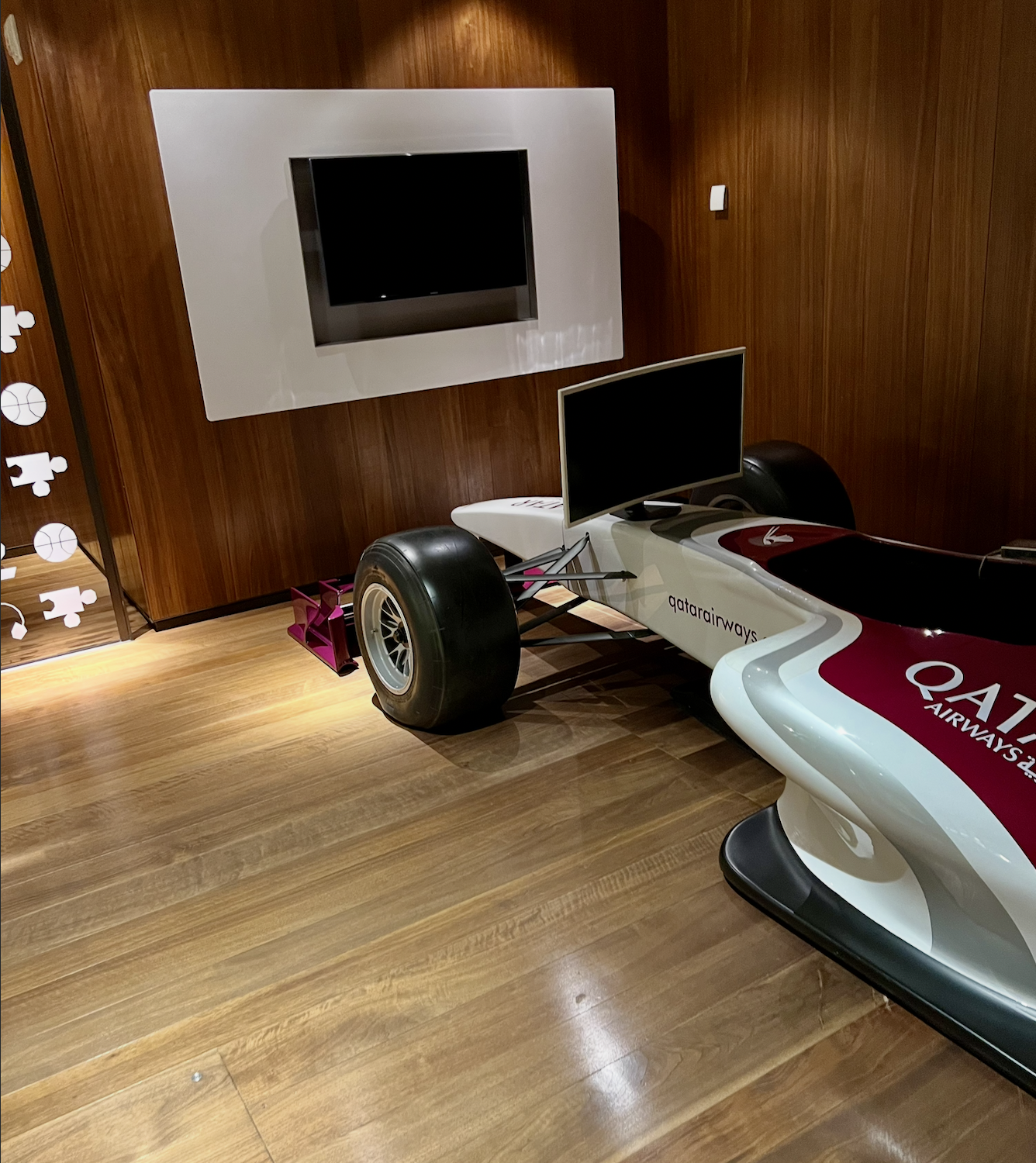
Additional amenities include a private duty-free area, a game room with an F1 simulator, a cigar lounge, and some of the best family facilities I have seen in any airport lounge.
Final Thoughts
Al Safwa is my favorite airport lounge in the world.
The space is vast, meticulously designed, and exhaustive in its offerings. While it can feel slightly impersonal and almost too quiet at times, those qualities do little to detract from the overall experience. The food, beverages, and amenities operate at the absolute peak of what is possible in a commercial airport setting.
It is not playful. It is not flashy. But it is exceptional.
